
 Image 1 of 1
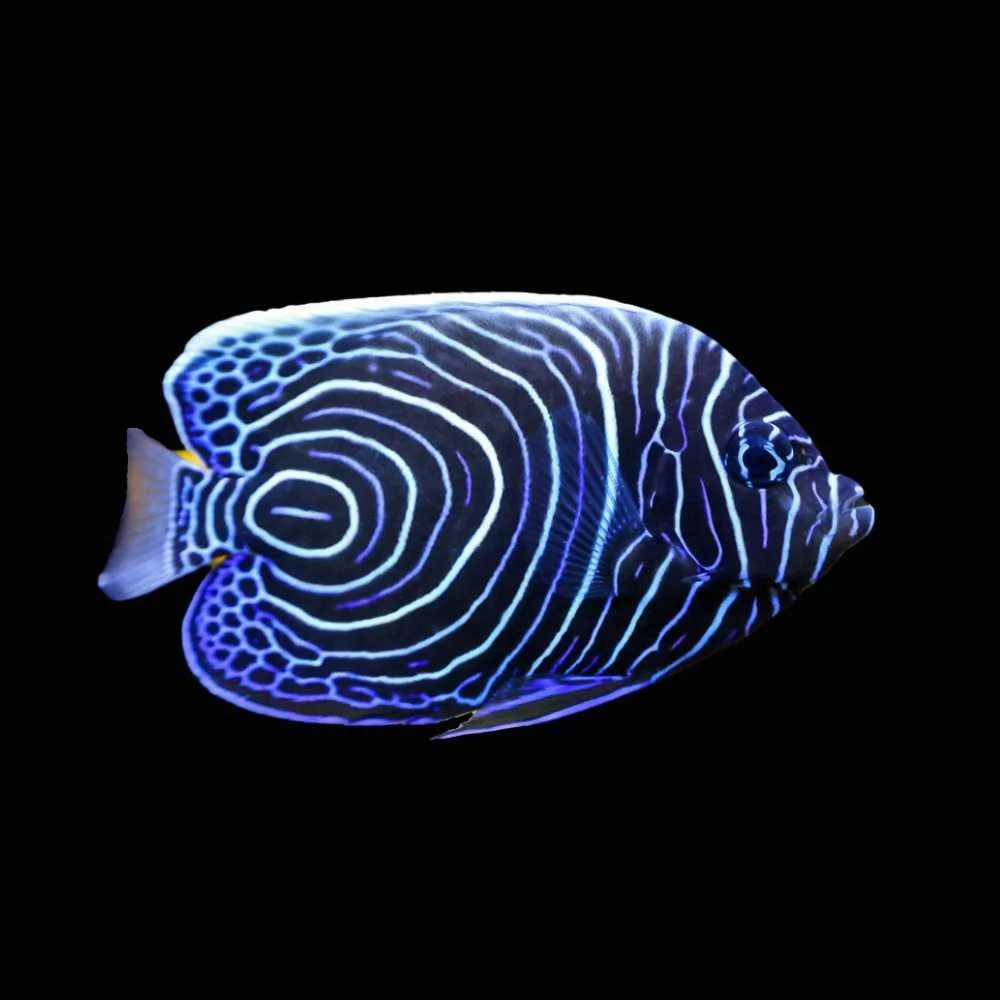
The , also known as the Emperor Angelfish, is a highly prized and iconic marine species featuring a striking juvenile coloration of deep midnight-blue concentric rings, white swirls, and electric-blue curved bands on a black background. As it matures, this species undergoes one of the most dramatic transformations in the marine world, shifting to an adult pattern of horizontal yellow and blue body stripes, a black mask over the eyes, and a bright yellow tail fin. Because it is a full-sized "large" angelfish rather than a dwarf species, it requires specialized care and massive aquarium real estate.
Tank Requirements
Minimum Tank Size: 220 gallons or larger; while juveniles can be temporarily housed in smaller grow-out tanks, they grow rapidly and will stall in growth or become hyper-aggressive if cramped.
Aquarium Decor: Massive live rock structures with wide caves and open swimming channels; requires high-capacity protein skimming and pristine water quality to prevent head and lateral line erosion (HLLE).
Temperature: 72°F – 78°F (22°C – 26°C).
Salinity (Specific Gravity): 1.020 – 1.025.
pH Range: 8.1 – 8.4.
Care and Feeding
Diet: Omnivorous; requires frequent, varied feedings including frozen mysis, krill, and chopped seafood. Must be fed specialized angelfish formulas containing marine sponge material, alongside heavy amounts of dried marine algae (nori) to protect its changing adult pigments.
Reef Safe Rating: Not reef safe; juveniles are chronic nippers of large polyp stony (LPS) corals, soft corals, zoanthids, and clam mantles. They are best suited for fish-only-with-live-rock (FOWLR) systems or very specific setups with unpalatable corals.
Temperament: Aggressive; highly territorial toward other large angelfish and fish with a similar body shape or color. It should generally be the dominant fish and final addition to a large community or predator marine tank.
The , also known as the Emperor Angelfish, is a highly prized and iconic marine species featuring a striking juvenile coloration of deep midnight-blue concentric rings, white swirls, and electric-blue curved bands on a black background. As it matures, this species undergoes one of the most dramatic transformations in the marine world, shifting to an adult pattern of horizontal yellow and blue body stripes, a black mask over the eyes, and a bright yellow tail fin. Because it is a full-sized "large" angelfish rather than a dwarf species, it requires specialized care and massive aquarium real estate.
Tank Requirements
Minimum Tank Size: 220 gallons or larger; while juveniles can be temporarily housed in smaller grow-out tanks, they grow rapidly and will stall in growth or become hyper-aggressive if cramped.
Aquarium Decor: Massive live rock structures with wide caves and open swimming channels; requires high-capacity protein skimming and pristine water quality to prevent head and lateral line erosion (HLLE).
Temperature: 72°F – 78°F (22°C – 26°C).
Salinity (Specific Gravity): 1.020 – 1.025.
pH Range: 8.1 – 8.4.
Care and Feeding
Diet: Omnivorous; requires frequent, varied feedings including frozen mysis, krill, and chopped seafood. Must be fed specialized angelfish formulas containing marine sponge material, alongside heavy amounts of dried marine algae (nori) to protect its changing adult pigments.
Reef Safe Rating: Not reef safe; juveniles are chronic nippers of large polyp stony (LPS) corals, soft corals, zoanthids, and clam mantles. They are best suited for fish-only-with-live-rock (FOWLR) systems or very specific setups with unpalatable corals.
Temperament: Aggressive; highly territorial toward other large angelfish and fish with a similar body shape or color. It should generally be the dominant fish and final addition to a large community or predator marine tank.