
 Image 1 of 1
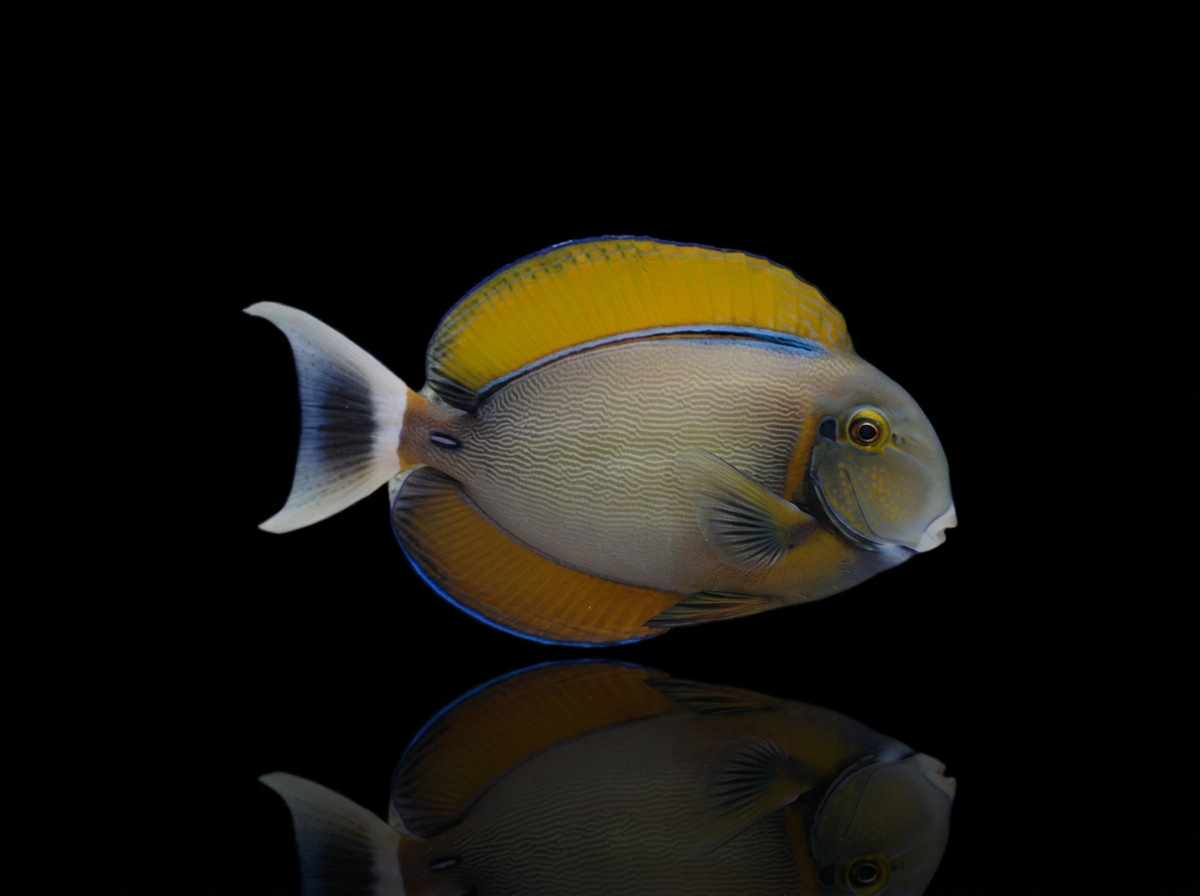
The Bariene Tang (Acanthurus bariene), also known as the Blackspot Surgeonfish, Eyespot Tang, or Orange Face Tang, is an elite, massive marine species featuring a deep grey-brown body detailed with fine horizontal blue pinstripes. As it matures, it develops a brilliant neon orange-to-yellow dorsal fin, a prominent black eyespot right behind the upper gill opening, and a highly convex, rounded forehead on dominant adult males. Extremely rare in the aquarium hobby, it is a giant of the Acanthurus family that demands immense swimming space and heavy oxygenation to support its high-speed activity levels.
Tank Requirements
Minimum Tank Size: 300 to 350 gallons or larger; because adults can grow up to a massive 15 to 20 inches in length, they require a tank at least eight feet long to prevent severe pacing stress.
Aquarium Decor: Colossal live rock networks forming large structural caves and wide-open horizontal racing channels. It requires very high turnover water flow and heavy protein skimming to maintain optimal dissolved oxygen levels.
Temperature: 72°F – 78°F (22°C – 26°C).
Salinity (Specific Gravity): 1.020 – 1.025.
pH Range: 8.1 – 8.4.
Care and Feeding
Diet: Herbivore; possesses a lightning-fast metabolism and requires two to three small feedings daily. Provide a continuous baseline of dried marine algae sheets (nori), spirulina-enriched flakes, and premium herbivore pellets, alongside minor protein variations like mysis shrimp.
Reef Safe Rating: Reef safe with caution; while it does not naturally consume coral tissue, its massive, thick body can easily tumble loose frags, and hungry individuals may pick at zoanthids or soft corals if they are underfed.
Temperament: Semi-aggressive; it is surprisingly one of the more manageable large Acanthurus species, but it will fiercely defend its established territory against similarly shaped tangs or direct competitors. Like its cousins, it features a razor-sharp, forward-pointing caudal spine on its tail base that must be handled with extreme caution.
The Bariene Tang (Acanthurus bariene), also known as the Blackspot Surgeonfish, Eyespot Tang, or Orange Face Tang, is an elite, massive marine species featuring a deep grey-brown body detailed with fine horizontal blue pinstripes. As it matures, it develops a brilliant neon orange-to-yellow dorsal fin, a prominent black eyespot right behind the upper gill opening, and a highly convex, rounded forehead on dominant adult males. Extremely rare in the aquarium hobby, it is a giant of the Acanthurus family that demands immense swimming space and heavy oxygenation to support its high-speed activity levels.
Tank Requirements
Minimum Tank Size: 300 to 350 gallons or larger; because adults can grow up to a massive 15 to 20 inches in length, they require a tank at least eight feet long to prevent severe pacing stress.
Aquarium Decor: Colossal live rock networks forming large structural caves and wide-open horizontal racing channels. It requires very high turnover water flow and heavy protein skimming to maintain optimal dissolved oxygen levels.
Temperature: 72°F – 78°F (22°C – 26°C).
Salinity (Specific Gravity): 1.020 – 1.025.
pH Range: 8.1 – 8.4.
Care and Feeding
Diet: Herbivore; possesses a lightning-fast metabolism and requires two to three small feedings daily. Provide a continuous baseline of dried marine algae sheets (nori), spirulina-enriched flakes, and premium herbivore pellets, alongside minor protein variations like mysis shrimp.
Reef Safe Rating: Reef safe with caution; while it does not naturally consume coral tissue, its massive, thick body can easily tumble loose frags, and hungry individuals may pick at zoanthids or soft corals if they are underfed.
Temperament: Semi-aggressive; it is surprisingly one of the more manageable large Acanthurus species, but it will fiercely defend its established territory against similarly shaped tangs or direct competitors. Like its cousins, it features a razor-sharp, forward-pointing caudal spine on its tail base that must be handled with extreme caution.