
 Image 1 of 1
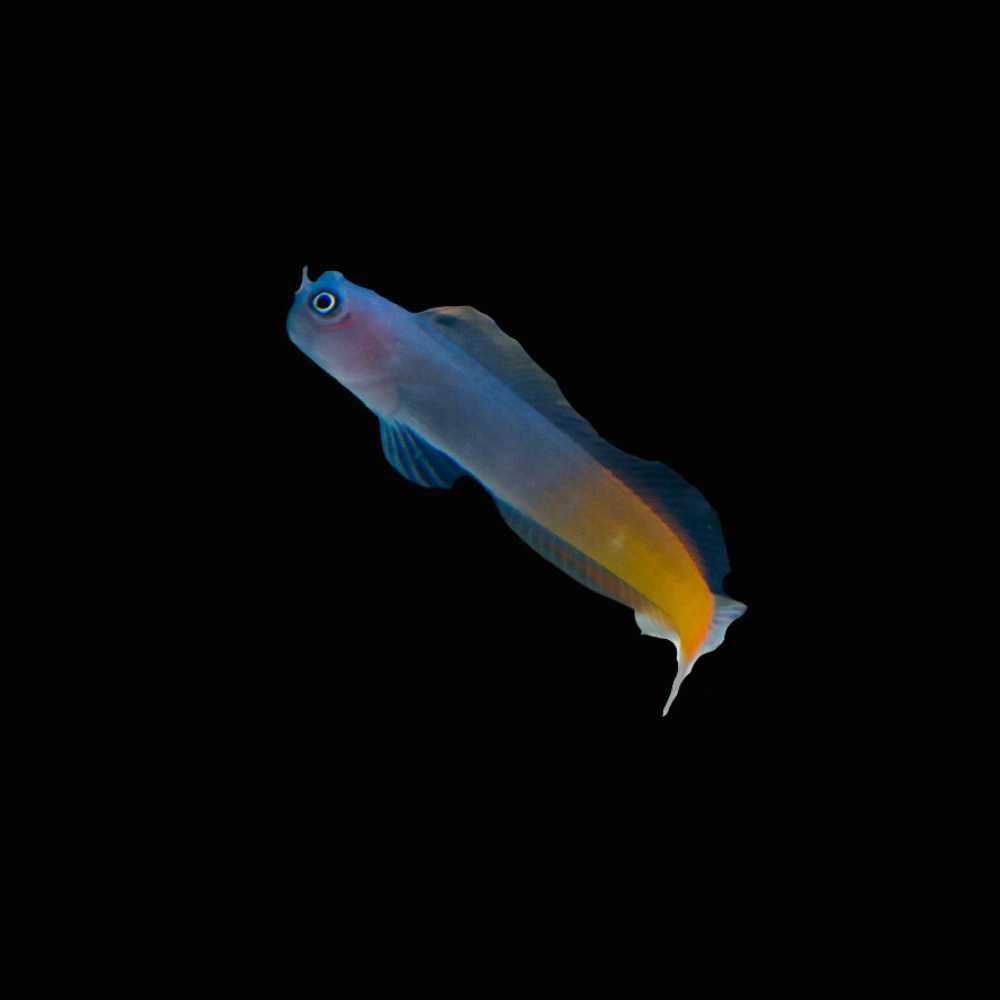
The Bicolor Blenny (Ecsenius bicolor), also widely known as the Two-Color Blenny, is a highly popular and charismatic marine species featuring a distinct color split that divides its body into a deep royal blue-to-purple front half and a vibrant dull-orange-to-gold rear half. Known for its expressive facial features, comical personality, and the small, brush-like antennas (cirri) between its eyes, it spends its day perching atop rock ledges or darting out to graze on algae.
Tank Requirements
Minimum Tank Size: 30 gallons or larger; its localized habits make it well-suited for nano and mid-sized reef layouts.
Aquarium Decor: Plentiful live rock structures with small holes, empty barnacle shells, or tight crevices where it can back itself in tail-first to perch and hide.
Temperature: 72°F – 78°F (22°C – 26°C).
Salinity (Specific Gravity): 1.020 – 1.025.
pH Range: 8.1 – 8.4.
Care and Feeding
Diet: Herbivore; a highly active grazer that relies on a steady supply of natural microalgae and biofilm coating the rockwork. Supplement its continuous grazing with daily offerings of dried marine algae sheets (nori), spirulina-enriched flakes, and high-quality herbivore pellets or frozen herbivore cubes.
Reef Safe Rating: Reef safe with caution; while it primarily targets nuisance film algae, hungry or bored individuals are notorious for nipping at the fleshy polyps of large polyp stony (LPS) corals, small polyp stony (SPS) coral tips, and clam mantles.
Temperament: Peaceful; it is highly docile toward unrelated open-water tank mates, but it can show sharp territorial aggression toward other blennies, gobies, or similarly shaped bottom-dwelling fish that venture too close to its favorite perching hole.
The Bicolor Blenny (Ecsenius bicolor), also widely known as the Two-Color Blenny, is a highly popular and charismatic marine species featuring a distinct color split that divides its body into a deep royal blue-to-purple front half and a vibrant dull-orange-to-gold rear half. Known for its expressive facial features, comical personality, and the small, brush-like antennas (cirri) between its eyes, it spends its day perching atop rock ledges or darting out to graze on algae.
Tank Requirements
Minimum Tank Size: 30 gallons or larger; its localized habits make it well-suited for nano and mid-sized reef layouts.
Aquarium Decor: Plentiful live rock structures with small holes, empty barnacle shells, or tight crevices where it can back itself in tail-first to perch and hide.
Temperature: 72°F – 78°F (22°C – 26°C).
Salinity (Specific Gravity): 1.020 – 1.025.
pH Range: 8.1 – 8.4.
Care and Feeding
Diet: Herbivore; a highly active grazer that relies on a steady supply of natural microalgae and biofilm coating the rockwork. Supplement its continuous grazing with daily offerings of dried marine algae sheets (nori), spirulina-enriched flakes, and high-quality herbivore pellets or frozen herbivore cubes.
Reef Safe Rating: Reef safe with caution; while it primarily targets nuisance film algae, hungry or bored individuals are notorious for nipping at the fleshy polyps of large polyp stony (LPS) corals, small polyp stony (SPS) coral tips, and clam mantles.
Temperament: Peaceful; it is highly docile toward unrelated open-water tank mates, but it can show sharp territorial aggression toward other blennies, gobies, or similarly shaped bottom-dwelling fish that venture too close to its favorite perching hole.