
 Image 1 of 1
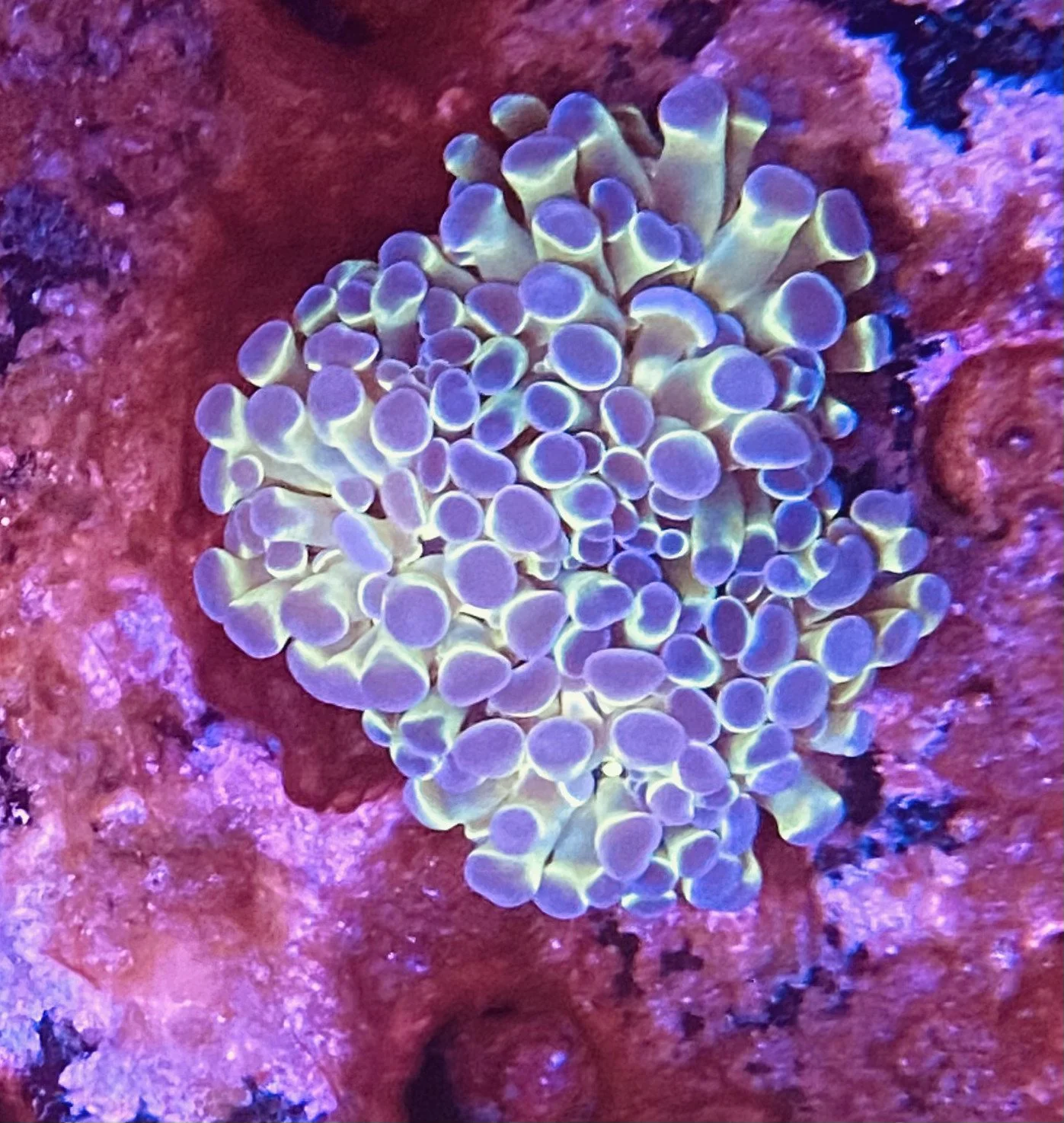
The bicolor hammer coral is a large polyp stony (LPS) coral featuring distinctive, hammer- or anchor-shaped tentacle tips displaying two contrasting colors—commonly a mix of vibrant green and purple. Highly prized in marine aquarium hobbies, they require moderate lighting, medium indirect water flow, and stable water chemistry.
Care Requirements
Lighting: Moderate (80–150 PAR), acclimated slowly to prevent bleaching or fading.
Water Flow: Medium and indirect; strong enough to stop debris from settling, but gentle enough not to tear the tissue.
Water Parameters: Temperature of 72–78°F, salinity at 1.023–1.025, alkalinity of 7–11 dKH, calcium at 380–450 ppm, and magnesium around 1300–1500 ppm.
Feeding: Photosynthetic, but benefits from occasional target feeding of micro-plankton, brine shrimp, or amino acids.
Placement & Temperament
Aggression: Moderately aggressive with long sweeper tentacles that can sting neighboring corals; maintain adequate spacing in the reef tank.
Placement: Best kept on the mid-to-lower levels of the aquarium aquascape.
Growth Type: Available as branching varieties (easier to care for and propagate) or wall types (more sensitive to changes and diseases like brown jelly)
The bicolor hammer coral is a large polyp stony (LPS) coral featuring distinctive, hammer- or anchor-shaped tentacle tips displaying two contrasting colors—commonly a mix of vibrant green and purple. Highly prized in marine aquarium hobbies, they require moderate lighting, medium indirect water flow, and stable water chemistry.
Care Requirements
Lighting: Moderate (80–150 PAR), acclimated slowly to prevent bleaching or fading.
Water Flow: Medium and indirect; strong enough to stop debris from settling, but gentle enough not to tear the tissue.
Water Parameters: Temperature of 72–78°F, salinity at 1.023–1.025, alkalinity of 7–11 dKH, calcium at 380–450 ppm, and magnesium around 1300–1500 ppm.
Feeding: Photosynthetic, but benefits from occasional target feeding of micro-plankton, brine shrimp, or amino acids.
Placement & Temperament
Aggression: Moderately aggressive with long sweeper tentacles that can sting neighboring corals; maintain adequate spacing in the reef tank.
Placement: Best kept on the mid-to-lower levels of the aquarium aquascape.
Growth Type: Available as branching varieties (easier to care for and propagate) or wall types (more sensitive to changes and diseases like brown jelly)