
 Image 1 of 1
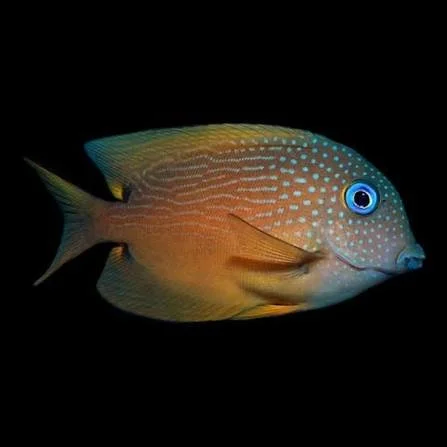
The Blue Eye Tang (Ctenochaetus binotatus), also known as the Two-Spot Bristletooth Tang, is a highly popular and functional marine species featuring a sleek, oval-shaped brownish-orange body covered in fine pinstripes and tiny blue spots around its face. It is instantly recognizable by its striking, electric-blue irises and two distinct, dark ink-black spots located at the bases of its dorsal and anal fins near the tail. Prized equally for its understated beauty and its tireless work ethic, this fish is a top-tier utility species that spends its entire day rasping troublesome algae film off tank walls and rockwork.
Tank Requirements
Minimum Tank Size: 75 to 90 gallons or larger; needs a minimum four-foot tank length to support its constant, active grazing patterns and maintain a stable environment.
Aquarium Decor: Extensive networks of mature live rock with ample surface area; it requires flat, exposed rock faces where natural diatom, microfilm, and detritus layers can accumulate for it to scrape.
Temperature: 72°F – 78°F (22°C – 26°C).
Salinity (Specific Gravity): 1.020 – 1.025.
pH Range: 8.1 – 8.4.
Care and Feeding
Diet: Herbivore and Detritivore; possesses specialized, comb-like teeth tailored for scraping film algae, diatoms, and organic detritus rather than tearing macroalgae. Supplement its continuous rock grazing with daily offerings of high-quality spirulina flakes, herbivore pellets, and dried marine algae sheets (nori).
Reef Safe Rating: Reef safe; it is completely peaceful and harmless toward small polyp stony (SPS) corals, large polyp stony (LPS) corals, soft corals, and mobile invertebrates, making it a perfect fit for reef systems.
Temperament: Semi-aggressive; it is exceptionally peaceful toward unrelated non-tang community fish. However, it can become highly territorial toward other bristletooth tangs or fish with similar grazing habits, and it should generally be kept as the only bristletooth in the tank.
The Blue Eye Tang (Ctenochaetus binotatus), also known as the Two-Spot Bristletooth Tang, is a highly popular and functional marine species featuring a sleek, oval-shaped brownish-orange body covered in fine pinstripes and tiny blue spots around its face. It is instantly recognizable by its striking, electric-blue irises and two distinct, dark ink-black spots located at the bases of its dorsal and anal fins near the tail. Prized equally for its understated beauty and its tireless work ethic, this fish is a top-tier utility species that spends its entire day rasping troublesome algae film off tank walls and rockwork.
Tank Requirements
Minimum Tank Size: 75 to 90 gallons or larger; needs a minimum four-foot tank length to support its constant, active grazing patterns and maintain a stable environment.
Aquarium Decor: Extensive networks of mature live rock with ample surface area; it requires flat, exposed rock faces where natural diatom, microfilm, and detritus layers can accumulate for it to scrape.
Temperature: 72°F – 78°F (22°C – 26°C).
Salinity (Specific Gravity): 1.020 – 1.025.
pH Range: 8.1 – 8.4.
Care and Feeding
Diet: Herbivore and Detritivore; possesses specialized, comb-like teeth tailored for scraping film algae, diatoms, and organic detritus rather than tearing macroalgae. Supplement its continuous rock grazing with daily offerings of high-quality spirulina flakes, herbivore pellets, and dried marine algae sheets (nori).
Reef Safe Rating: Reef safe; it is completely peaceful and harmless toward small polyp stony (SPS) corals, large polyp stony (LPS) corals, soft corals, and mobile invertebrates, making it a perfect fit for reef systems.
Temperament: Semi-aggressive; it is exceptionally peaceful toward unrelated non-tang community fish. However, it can become highly territorial toward other bristletooth tangs or fish with similar grazing habits, and it should generally be kept as the only bristletooth in the tank.