
 Image 1 of 1
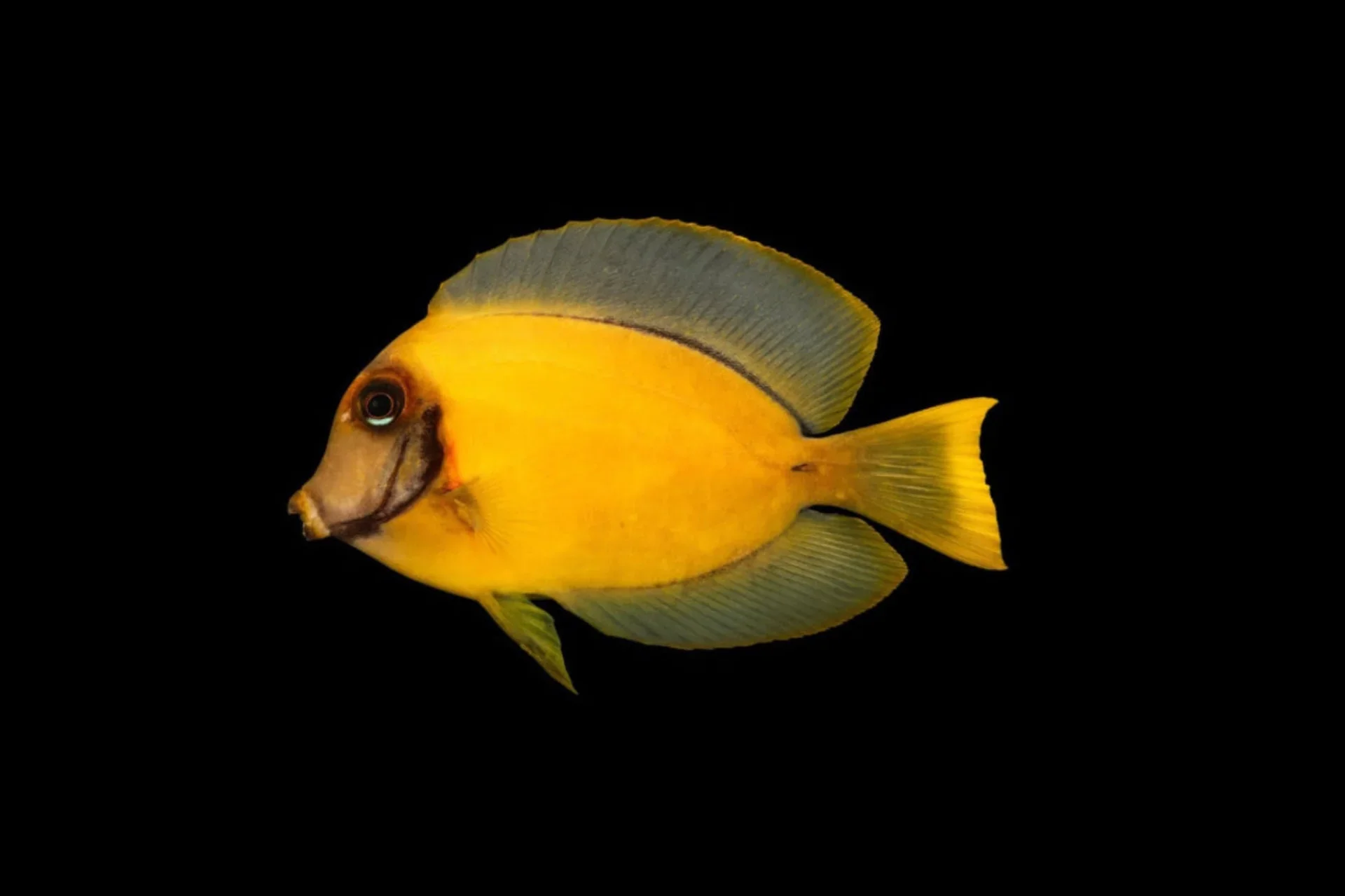
The Chocolate Tang (Acanthurus pyroferus), also widely known as the Mimic Surgeonfish or Orange-Gilled Surgeonfish, is a highly fascinating marine fish celebrated for its incredible evolutionary defense strategy. As a juvenile, this fish completely mimics the appearance and bright coloration of specific dwarf angelfish species—such as the Herald's, Lemonpeel, or Eibli Angelfish—to trick predators into ignoring it. As it matures into an adult, it undergoes a complete color transformation, shedding its angelfish disguise for a sleek, smoky chocolate-brown body highlighted by an orange-to-yellow patch behind its pectoral fins and a brilliant blue accent tracing along its gill plates.
Tank Requirements
Minimum Tank Size: 75 to 90 gallons or larger; as a robust and powerful swimmer, it requires a minimum four-foot tank length to support its active swimming patterns and prevent boundary pacing.
Aquarium Decor: Plentiful live rock structures forming large caves and deep channels; it needs open swimming lanes combined with tight rock crevices where it can securely hide if startled.
Temperature: 72°F – 78°F (22°C – 26°C).
Salinity (Specific Gravity): 1.020 – 1.025.
pH Range: 8.1 – 8.4.
Care and Feeding
Diet: Herbivore; has a very high metabolism and requires continuous grazing opportunities. Provide a heavy daily baseline of dried marine algae sheets (nori), spirulina flakes, and premium herbivore pellets to preserve its overall health, alongside minor supplements of frozen mysis shrimp.
Reef Safe Rating: Reef safe; it is an outstanding citizen for coral displays, completely ignoring small polyp stony (SPS) corals, large polyp stony (LPS) corals, soft corals, and mobile invertebrates.
Temperament: Semi-aggressive; it is generally peaceful toward unrelated community fish. However, it can become fiercely territorial toward other tangs of similar shape or color patterns, and it features a razor-sharp caudal spine on its tail base that must be respected during handling.
The Chocolate Tang (Acanthurus pyroferus), also widely known as the Mimic Surgeonfish or Orange-Gilled Surgeonfish, is a highly fascinating marine fish celebrated for its incredible evolutionary defense strategy. As a juvenile, this fish completely mimics the appearance and bright coloration of specific dwarf angelfish species—such as the Herald's, Lemonpeel, or Eibli Angelfish—to trick predators into ignoring it. As it matures into an adult, it undergoes a complete color transformation, shedding its angelfish disguise for a sleek, smoky chocolate-brown body highlighted by an orange-to-yellow patch behind its pectoral fins and a brilliant blue accent tracing along its gill plates.
Tank Requirements
Minimum Tank Size: 75 to 90 gallons or larger; as a robust and powerful swimmer, it requires a minimum four-foot tank length to support its active swimming patterns and prevent boundary pacing.
Aquarium Decor: Plentiful live rock structures forming large caves and deep channels; it needs open swimming lanes combined with tight rock crevices where it can securely hide if startled.
Temperature: 72°F – 78°F (22°C – 26°C).
Salinity (Specific Gravity): 1.020 – 1.025.
pH Range: 8.1 – 8.4.
Care and Feeding
Diet: Herbivore; has a very high metabolism and requires continuous grazing opportunities. Provide a heavy daily baseline of dried marine algae sheets (nori), spirulina flakes, and premium herbivore pellets to preserve its overall health, alongside minor supplements of frozen mysis shrimp.
Reef Safe Rating: Reef safe; it is an outstanding citizen for coral displays, completely ignoring small polyp stony (SPS) corals, large polyp stony (LPS) corals, soft corals, and mobile invertebrates.
Temperament: Semi-aggressive; it is generally peaceful toward unrelated community fish. However, it can become fiercely territorial toward other tangs of similar shape or color patterns, and it features a razor-sharp caudal spine on its tail base that must be respected during handling.