
 Image 1 of 1
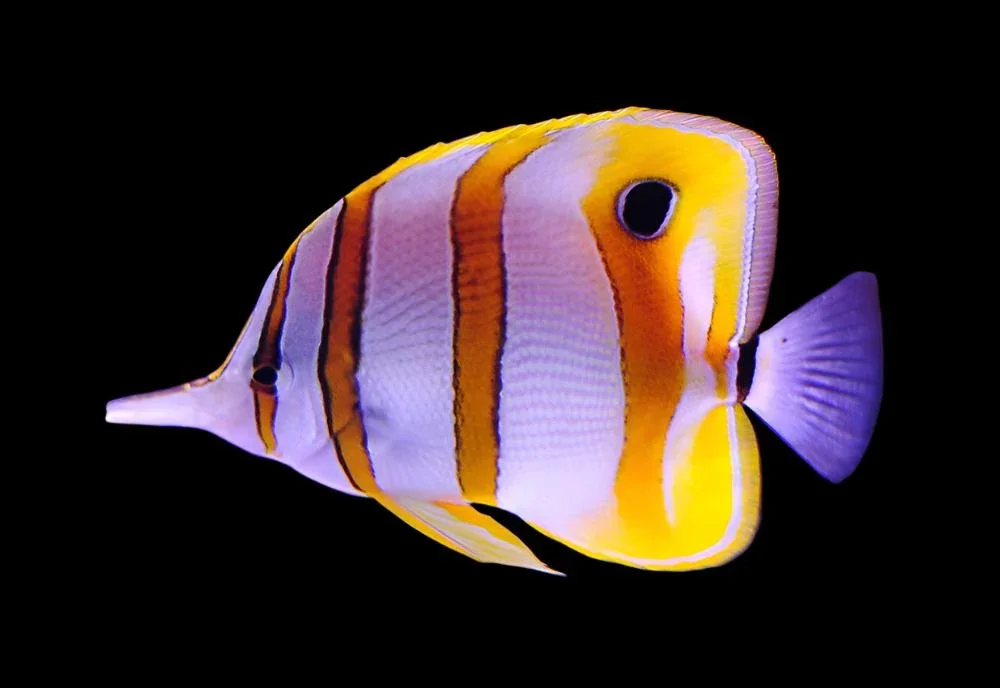
The Copperband Butterflyfish (Chelmon rostratus), also known as the Beaked Coralfish, is an iconic and visually striking marine species featuring a highly compressed, silvery-white body adorned with four distinct, copper-orange vertical bands outlined in black. It is instantly recognizable by its long, needle-like snout and a prominent false eyespot on its rear dorsal fin, which serves to confuse predators. Highly sought after by marine aquarists, it is famous both as a breathtaking centerpiece and for its functional ability to clear tanks of pest glass anemones (Aiptasia).
Tank Requirements
Minimum Tank Size: 75 to 90 gallons or larger; demands a spacious layout to minimize stress and prevent continuous border pacing.
Aquarium Decor: Mature, established live rock networks forming large caves and narrow crevices where it can hunt for hidden micro-fauna using its specialized snout.
Temperature: 72°F – 78°F (22°C – 26°C).
Salinity (Specific Gravity): 1.020 – 1.025.
pH Range: 8.1 – 8.4.
Care and Feeding
Diet: Carnivore; can be exceptionally difficult to transition to prepared foods. Requires frequent daily feedings of live or frozen mysis shrimp, enriched brine shrimp, bloodworms, or finely chopped fresh clams and mussels frozen on the half-shell to stimulate its natural picking response.
Reef Safe Rating: Reef safe with caution; while it will completely ignore most small polyp stony (SPS) corals, it is a persistent threat to tube worms, feather dusters, and small invertebrates, and it may occasionally nip at the fleshy mantles of clams or large polyp stony (LPS) corals if underfed.
Temperament: Peaceful; it is entirely docile toward unrelated tank mates but will fight aggressively with its own kind or other similarly shaped butterflyfish, and it should only be kept as a single specimen per tank.
The Copperband Butterflyfish (Chelmon rostratus), also known as the Beaked Coralfish, is an iconic and visually striking marine species featuring a highly compressed, silvery-white body adorned with four distinct, copper-orange vertical bands outlined in black. It is instantly recognizable by its long, needle-like snout and a prominent false eyespot on its rear dorsal fin, which serves to confuse predators. Highly sought after by marine aquarists, it is famous both as a breathtaking centerpiece and for its functional ability to clear tanks of pest glass anemones (Aiptasia).
Tank Requirements
Minimum Tank Size: 75 to 90 gallons or larger; demands a spacious layout to minimize stress and prevent continuous border pacing.
Aquarium Decor: Mature, established live rock networks forming large caves and narrow crevices where it can hunt for hidden micro-fauna using its specialized snout.
Temperature: 72°F – 78°F (22°C – 26°C).
Salinity (Specific Gravity): 1.020 – 1.025.
pH Range: 8.1 – 8.4.
Care and Feeding
Diet: Carnivore; can be exceptionally difficult to transition to prepared foods. Requires frequent daily feedings of live or frozen mysis shrimp, enriched brine shrimp, bloodworms, or finely chopped fresh clams and mussels frozen on the half-shell to stimulate its natural picking response.
Reef Safe Rating: Reef safe with caution; while it will completely ignore most small polyp stony (SPS) corals, it is a persistent threat to tube worms, feather dusters, and small invertebrates, and it may occasionally nip at the fleshy mantles of clams or large polyp stony (LPS) corals if underfed.
Temperament: Peaceful; it is entirely docile toward unrelated tank mates but will fight aggressively with its own kind or other similarly shaped butterflyfish, and it should only be kept as a single specimen per tank.