
 Image 1 of 1
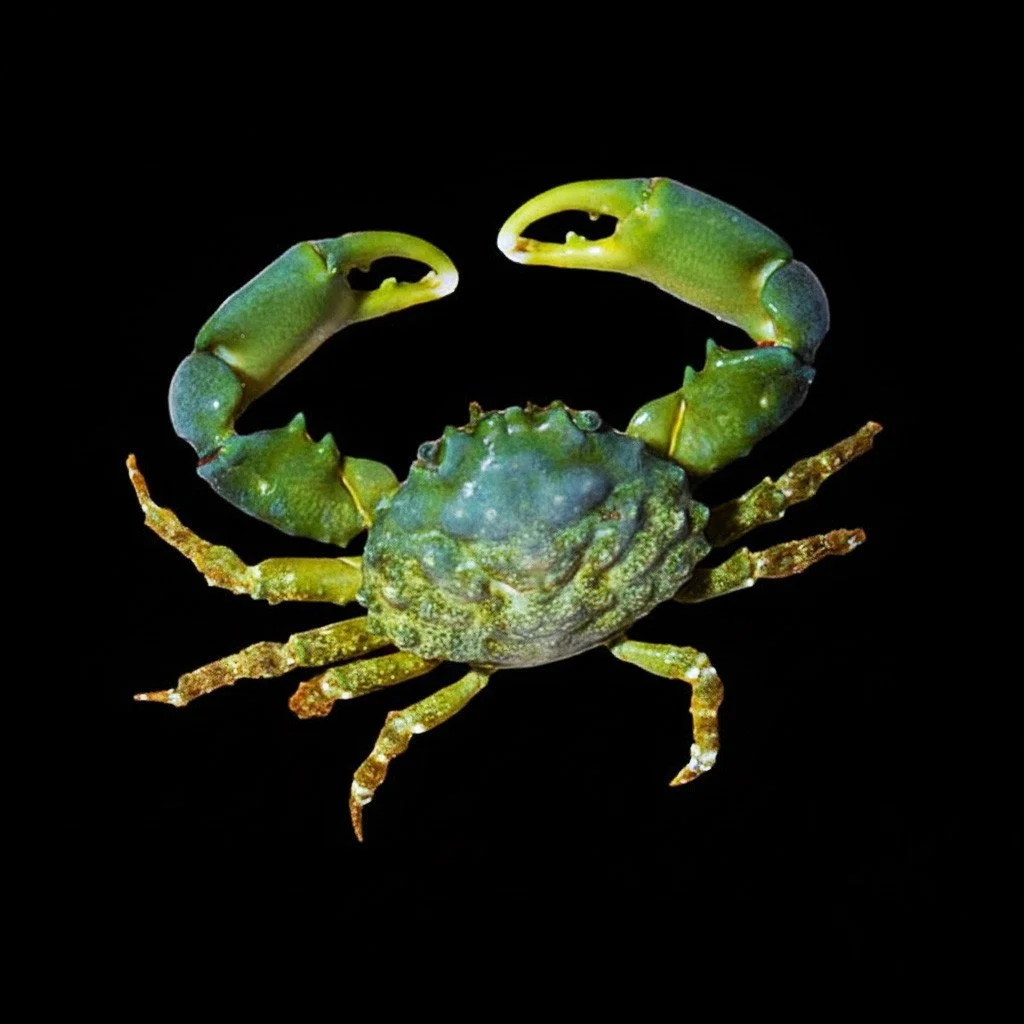
The Emerald Crab (Mithraculus sculptus), also widely known as the Green Clinging Crab, is an exceptionally popular and highly functional marine invertebrate featuring a distinct, metallic emerald-green coloration and a flat, heavily armored carapace. It is instantly recognized by its smooth, oval-shaped body and its large, spoon-like claws (chelae) that are perfectly evolved for scraping rocks. Celebrated in the saltwater hobby as an elite member of the clean-up crew, this industrious nocturnal scavenger is primarily introduced to handle tough, nuisance algae that other invertebrates refuse to touch.
Tank Requirements
Minimum Tank Size: 10 gallons or larger; highly versatile and suitable for any system size, from small nano reefs to massive marine displays.
Aquarium Decor: Abundant configurations of mature live rock with deep crevices, tight caves, and shaded overhangs where it can securely squeeze into and hide during daylight hours.
Temperature: 72°F – 78°F (22°C – 26°C).
Salinity (Specific Gravity): 1.023 – 1.025; highly sensitive to rapid osmotic shifts, copper-based medications, and high nitrate levels.
pH Range: 8.1 – 8.4.
Care and Feeding
Diet: Omnivore and Scavenger; it is a legendary utility invertebrate praised for being one of the only reliable consumers of tough bubble algae (Valonia). It will also eagerly consume hair algae, film algae, detritus, and leftover fish food. If the aquarium lacks natural algae growth, its diet must be supplemented with dried seaweed sheets or sinking herbivore pellets to prevent starvation.
Reef Safe Rating: Reef safe with caution; it is generally harmless toward small polyp stony (SPS) corals, large polyp stony (LPS) corals, and soft corals. However, if it becomes severely underfed or grows to a very large adult size, it can become opportunistic and may begin nipping at coral polyps, small fish, or delicate invertebrates at night.
Temperament: Semi-aggressive; completely docile toward open-water tank mates, but it can show minor territorial aggression toward other crabs if crowded into a small space. It requires trace amounts of iodine in the water column to safely shed its old exoskeleton during its natural molting process.
The Emerald Crab (Mithraculus sculptus), also widely known as the Green Clinging Crab, is an exceptionally popular and highly functional marine invertebrate featuring a distinct, metallic emerald-green coloration and a flat, heavily armored carapace. It is instantly recognized by its smooth, oval-shaped body and its large, spoon-like claws (chelae) that are perfectly evolved for scraping rocks. Celebrated in the saltwater hobby as an elite member of the clean-up crew, this industrious nocturnal scavenger is primarily introduced to handle tough, nuisance algae that other invertebrates refuse to touch.
Tank Requirements
Minimum Tank Size: 10 gallons or larger; highly versatile and suitable for any system size, from small nano reefs to massive marine displays.
Aquarium Decor: Abundant configurations of mature live rock with deep crevices, tight caves, and shaded overhangs where it can securely squeeze into and hide during daylight hours.
Temperature: 72°F – 78°F (22°C – 26°C).
Salinity (Specific Gravity): 1.023 – 1.025; highly sensitive to rapid osmotic shifts, copper-based medications, and high nitrate levels.
pH Range: 8.1 – 8.4.
Care and Feeding
Diet: Omnivore and Scavenger; it is a legendary utility invertebrate praised for being one of the only reliable consumers of tough bubble algae (Valonia). It will also eagerly consume hair algae, film algae, detritus, and leftover fish food. If the aquarium lacks natural algae growth, its diet must be supplemented with dried seaweed sheets or sinking herbivore pellets to prevent starvation.
Reef Safe Rating: Reef safe with caution; it is generally harmless toward small polyp stony (SPS) corals, large polyp stony (LPS) corals, and soft corals. However, if it becomes severely underfed or grows to a very large adult size, it can become opportunistic and may begin nipping at coral polyps, small fish, or delicate invertebrates at night.
Temperament: Semi-aggressive; completely docile toward open-water tank mates, but it can show minor territorial aggression toward other crabs if crowded into a small space. It requires trace amounts of iodine in the water column to safely shed its old exoskeleton during its natural molting process.