
 Image 1 of 1
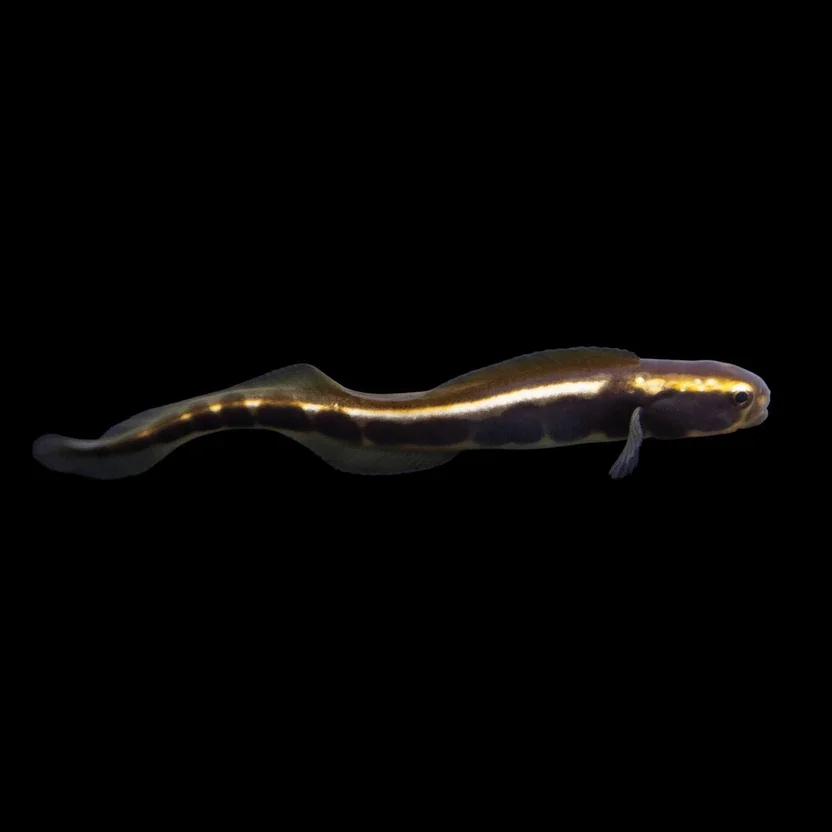
The Engineer Goby (Pholidichthys leucotaenia), also widely known as the Convict Goby, is a highly fascinating marine species famous for its dramatic physical and behavioral transformation. As small juveniles, they feature a sleek black body with a striking, horizontal neon-white-to-silver stripe, closely mimicking the venomous striped eel catfish to deter predators. As they mature, this line fractures into a complex network of bold, zebra-like vertical black and white bands, and their bodies elongate into a massive, eel-like shape. They are celebrated reef inhabitants known for their industrious nature as master excavators of the substrate.
Tank Requirements
Minimum Tank Size: 40 to 55 gallons or larger for a single specimen; a 75-gallon aquarium or larger is highly recommended for a group to accommodate their impressive adult length.
Aquarium Decor: All base foundation live rock must sit directly on the bottom glass of the aquarium. Because these fish tunnel tirelessly beneath the sand, placing rockwork on top of loose substrate will lead to undermining, rock shifts, and catastrophic glass breakage. Provide a deep sandbed (at least 2 to 3 inches) of mixed fine sand and small shell rubble to aid their tunnel construction.
Temperature: 72°F – 78°F (22°C – 26°C).
Salinity (Specific Gravity): 1.020 – 1.025.
pH Range: 8.1 – 8.4.
Care and Feeding
Diet: Carnivore; an exceptionally enthusiastic feeder that will dart out of its tunnel system to grab food out of the water column. Provide a varied daily menu consisting of frozen mysis shrimp, frozen brine shrimp, chopped fresh seafoods, and high-quality sinking carnivore pellets that land near their burrow entrances.
Reef Safe Rating: Reef safe; they are completely harmless to small polyp stony (SPS) corals, large polyp stony (LPS) corals, and soft corals. However, their heavy digging habits will continuously throw sand into the water column and can easily bury or smother low-lying corals placed directly on the sandbed.
Temperament: Peaceful; despite their large adult size and intimidating eel-like appearance, they are entirely docile community residents. They are highly social and thrive best when kept in small groups or colonies, where they will peacefully share a massive, interconnected network of communal burrows beneath the rockwork.
The Engineer Goby (Pholidichthys leucotaenia), also widely known as the Convict Goby, is a highly fascinating marine species famous for its dramatic physical and behavioral transformation. As small juveniles, they feature a sleek black body with a striking, horizontal neon-white-to-silver stripe, closely mimicking the venomous striped eel catfish to deter predators. As they mature, this line fractures into a complex network of bold, zebra-like vertical black and white bands, and their bodies elongate into a massive, eel-like shape. They are celebrated reef inhabitants known for their industrious nature as master excavators of the substrate.
Tank Requirements
Minimum Tank Size: 40 to 55 gallons or larger for a single specimen; a 75-gallon aquarium or larger is highly recommended for a group to accommodate their impressive adult length.
Aquarium Decor: All base foundation live rock must sit directly on the bottom glass of the aquarium. Because these fish tunnel tirelessly beneath the sand, placing rockwork on top of loose substrate will lead to undermining, rock shifts, and catastrophic glass breakage. Provide a deep sandbed (at least 2 to 3 inches) of mixed fine sand and small shell rubble to aid their tunnel construction.
Temperature: 72°F – 78°F (22°C – 26°C).
Salinity (Specific Gravity): 1.020 – 1.025.
pH Range: 8.1 – 8.4.
Care and Feeding
Diet: Carnivore; an exceptionally enthusiastic feeder that will dart out of its tunnel system to grab food out of the water column. Provide a varied daily menu consisting of frozen mysis shrimp, frozen brine shrimp, chopped fresh seafoods, and high-quality sinking carnivore pellets that land near their burrow entrances.
Reef Safe Rating: Reef safe; they are completely harmless to small polyp stony (SPS) corals, large polyp stony (LPS) corals, and soft corals. However, their heavy digging habits will continuously throw sand into the water column and can easily bury or smother low-lying corals placed directly on the sandbed.
Temperament: Peaceful; despite their large adult size and intimidating eel-like appearance, they are entirely docile community residents. They are highly social and thrive best when kept in small groups or colonies, where they will peacefully share a massive, interconnected network of communal burrows beneath the rockwork.