
 Image 1 of 1
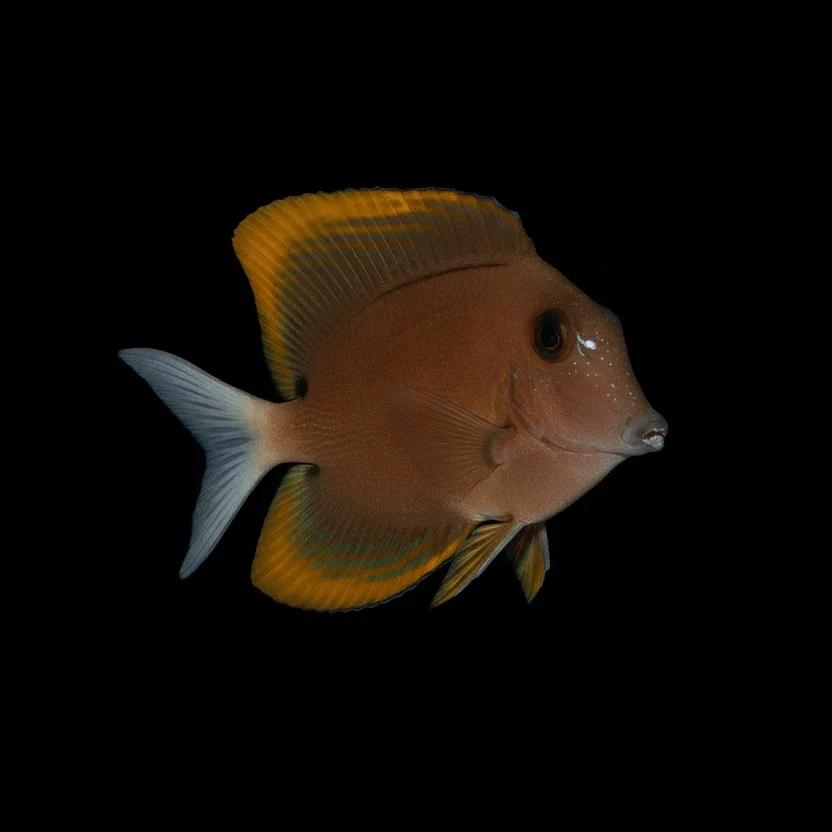
The Flamefin Tang (Ctenochaetus tominiensis), also widely known as the Tomini Tang or Tomini Bristletooth Tang, is a highly popular and functional marine species featuring a sleek, oval-shaped slate-grey-to-tan body that dramatically transitions into a vibrant, fiery orange-to-yellow color along the margins of its dorsal and anal fins. Accented by a stark white tail fin and small blue-to-gold flecks around its face, it is celebrated as one of the smallest and most manageable members of the surgeonfish family. It is a top-tier utility species that brings subtle beauty and a tireless work ethic to a reef tank by continuously scraping troublesome algae films.
Tank Requirements
Minimum Tank Size: 70 to 75 gallons or larger; its compact adult size makes it one of the few tangs suitable for mid-sized reef layouts, though it still requires at least a four-foot tank length for active swimming.
Aquarium Decor: Plentiful live rock structures with wide, flat surfaces; it requires established rock faces where natural diatom, microfilm, and detritus layers can accumulate for it to rasp away.
Temperature: 72°F – 78°F (22°C – 26°C).
Salinity (Specific Gravity): 1.020 – 1.025.
pH Range: 8.1 – 8.4.
Care and Feeding
Diet: Herbivore and Detritivore; possesses specialized, comb-like teeth tailored for scraping film algae, cyanobacteria, diatoms, and organic detritus rather than tearing macroalgae sheets. Supplement its continuous rock grazing with daily offerings of high-quality spirulina flakes, herbivore pellets, and dried marine algae sheets (nori).
Reef Safe Rating: Reef safe; it is completely peaceful and harmless toward small polyp stony (SPS) corals, large polyp stony (LPS) corals, soft corals, and mobile invertebrates, making it a perfect model citizen for a reef system.
Temperament: Semi-aggressive; it is exceptionally peaceful toward unrelated non-tang community fish and is often less assertive than larger surgeonfish species. However, it can become highly territorial toward other bristletooth tangs or fish with similar body shapes and grazing habits, so it should be kept as the only bristletooth in the tank.
The Flamefin Tang (Ctenochaetus tominiensis), also widely known as the Tomini Tang or Tomini Bristletooth Tang, is a highly popular and functional marine species featuring a sleek, oval-shaped slate-grey-to-tan body that dramatically transitions into a vibrant, fiery orange-to-yellow color along the margins of its dorsal and anal fins. Accented by a stark white tail fin and small blue-to-gold flecks around its face, it is celebrated as one of the smallest and most manageable members of the surgeonfish family. It is a top-tier utility species that brings subtle beauty and a tireless work ethic to a reef tank by continuously scraping troublesome algae films.
Tank Requirements
Minimum Tank Size: 70 to 75 gallons or larger; its compact adult size makes it one of the few tangs suitable for mid-sized reef layouts, though it still requires at least a four-foot tank length for active swimming.
Aquarium Decor: Plentiful live rock structures with wide, flat surfaces; it requires established rock faces where natural diatom, microfilm, and detritus layers can accumulate for it to rasp away.
Temperature: 72°F – 78°F (22°C – 26°C).
Salinity (Specific Gravity): 1.020 – 1.025.
pH Range: 8.1 – 8.4.
Care and Feeding
Diet: Herbivore and Detritivore; possesses specialized, comb-like teeth tailored for scraping film algae, cyanobacteria, diatoms, and organic detritus rather than tearing macroalgae sheets. Supplement its continuous rock grazing with daily offerings of high-quality spirulina flakes, herbivore pellets, and dried marine algae sheets (nori).
Reef Safe Rating: Reef safe; it is completely peaceful and harmless toward small polyp stony (SPS) corals, large polyp stony (LPS) corals, soft corals, and mobile invertebrates, making it a perfect model citizen for a reef system.
Temperament: Semi-aggressive; it is exceptionally peaceful toward unrelated non-tang community fish and is often less assertive than larger surgeonfish species. However, it can become highly territorial toward other bristletooth tangs or fish with similar body shapes and grazing habits, so it should be kept as the only bristletooth in the tank.