
 Image 1 of 1
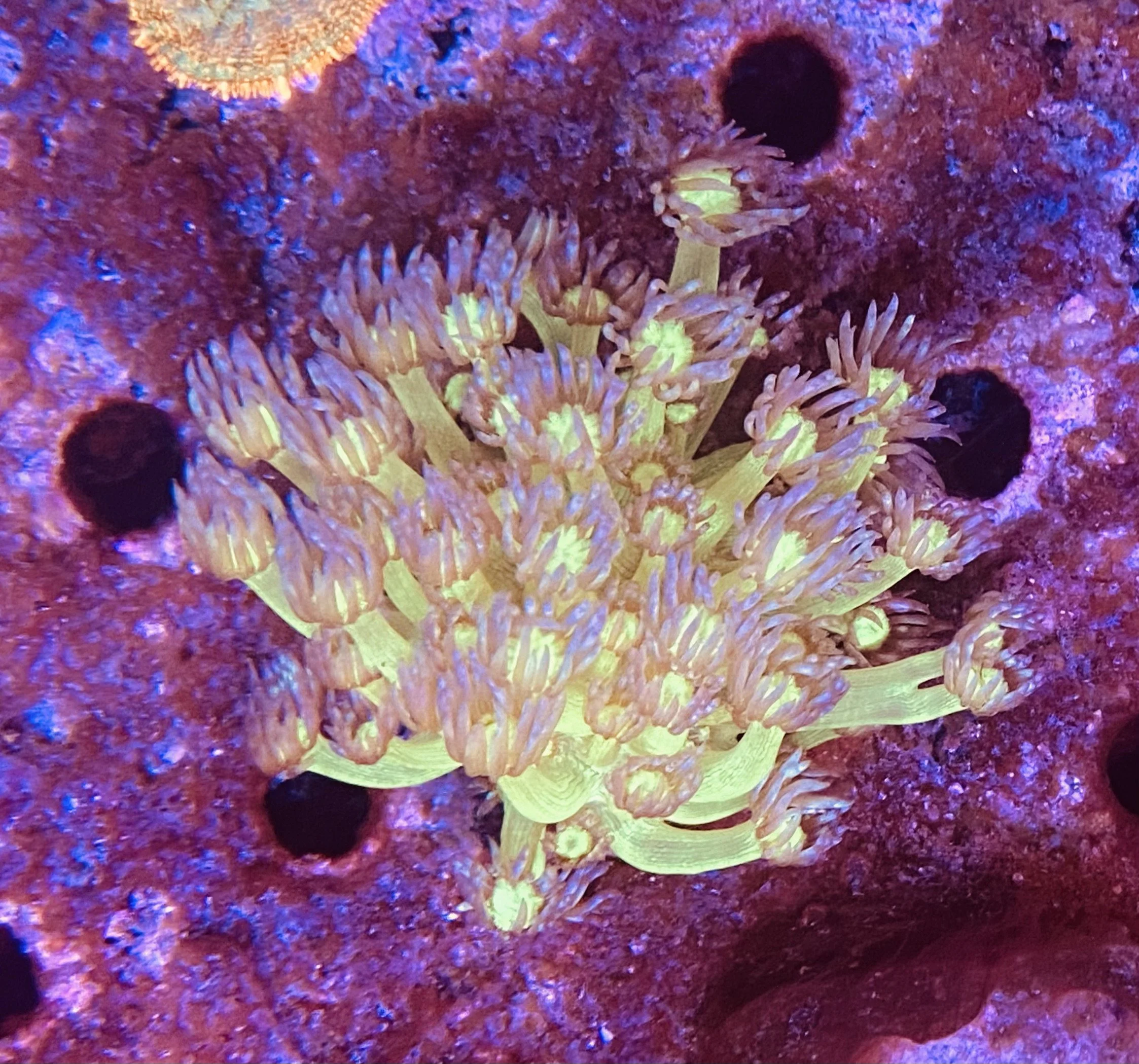
Goniopora—commonly known as flowerpot coral or daisy coral—is a genus of large polyp stony (LPS) coral featuring long, flowing, daisy-like polyps. Native to Indo-Pacific turbid lagoons and shallow reef slopes, they are prized in marine aquariums for their vibrant colors and mesmerizing movement.
Overview and Identification
Common Names: Flowerpot coral, daisy coral, ball coral.
Structure: They have a hard calcium-based skeleton covered by soft tissue from which long, flower-like polyps extend during the day.
The Tentacle Rule: Each individual polyp is tipped with 24 tentacles surrounding a central mouth. This distinguishes them from Alveopora, which look very similar but only have 12 tentacles per polyp.
Aquarium Care and Requirements
While once considered nearly impossible to keep long-term, modern reef-keeping success with Goniopora relies on strict nutritional and environmental stability:
Lighting: Low to moderate intensity (PAR 80 to 150). Placing them on the bottom sandbed initially helps prevent light shock.
Water Flow: Gentle, random, and indirect water movement (similar to torch coral preferences) to keep debris off their tissue without damaging it.
Feeding: Regular target feeding is vital. They thrive when provided with fine particulate foods, phytoplankton, microplankton, and amino acids several times a week.
Water Parameters: Maintain stable alkalinity (8–9 dKH), calcium (420–450 ppm), and magnesium (1300–1400 ppm). Trace elements like iron and manganese are also thought to significantly boost long-term vitality
Goniopora—commonly known as flowerpot coral or daisy coral—is a genus of large polyp stony (LPS) coral featuring long, flowing, daisy-like polyps. Native to Indo-Pacific turbid lagoons and shallow reef slopes, they are prized in marine aquariums for their vibrant colors and mesmerizing movement.
Overview and Identification
Common Names: Flowerpot coral, daisy coral, ball coral.
Structure: They have a hard calcium-based skeleton covered by soft tissue from which long, flower-like polyps extend during the day.
The Tentacle Rule: Each individual polyp is tipped with 24 tentacles surrounding a central mouth. This distinguishes them from Alveopora, which look very similar but only have 12 tentacles per polyp.
Aquarium Care and Requirements
While once considered nearly impossible to keep long-term, modern reef-keeping success with Goniopora relies on strict nutritional and environmental stability:
Lighting: Low to moderate intensity (PAR 80 to 150). Placing them on the bottom sandbed initially helps prevent light shock.
Water Flow: Gentle, random, and indirect water movement (similar to torch coral preferences) to keep debris off their tissue without damaging it.
Feeding: Regular target feeding is vital. They thrive when provided with fine particulate foods, phytoplankton, microplankton, and amino acids several times a week.
Water Parameters: Maintain stable alkalinity (8–9 dKH), calcium (420–450 ppm), and magnesium (1300–1400 ppm). Trace elements like iron and manganese are also thought to significantly boost long-term vitality