
 Image 1 of 1
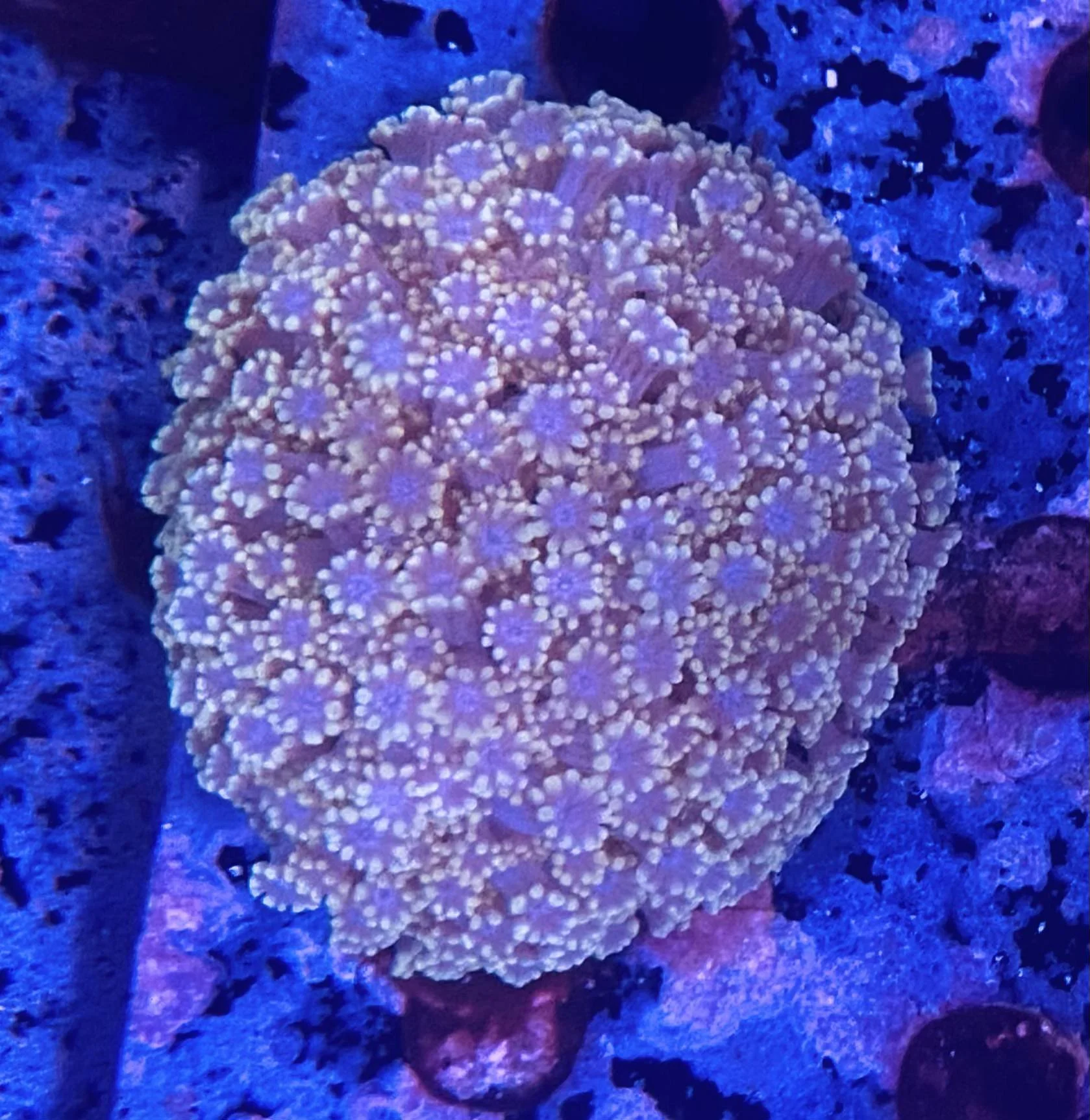
The Goniopora Coral (Goniopora sp.), commonly known as the Flower Pot Coral, is a strikingly beautiful large polyp stony (LPS) coral featuring a dense dome of long, column-like polyps that extend outward and terminate in distinct 24-tipped, star-shaped heads. Popular for introducing hypnotic, anemone-like movement to a reef aquarium, it demands stable water parameters and consistent trace mineral availability, making it an excellent choice for intermediate hobbyists looking to add high-end visual flair.
Tank Requirements
Lighting: Low to moderate (50–150 PAR); prefers subdued or indirect lighting, as overly bright illumination will prevent its long polyps from extending and can lead to bleaching.
Water Flow: Moderate and indirect; requires a gentle, swaying current that allows the polyps to dance fluidly without pinning them down or blasting them against their rigid skeletal base.
Temperature: 72°F – 78°F (22°C – 26°C).
Salinity (Specific Gravity): 1.023 – 1.025.
pH Range: 8.1 – 8.4.
Care and Feeding
Placement: Bottom to middle sections of the aquarium, securely mounted on a rock ledge or resting on a stable sandbed where its long, delicate polyps have plenty of room to stretch out without brushing against sharp surfaces.
Diet: Photosynthetic via zooxanthellae, but relies heavily on regular target feeding to thrive; it absorbs microscopic plankton, specialized powdered reef foods, oyster eggs, and dissolved organic nutrients straight from the water column.
Temperament: Semi-aggressive; it does not possess long, classic sweeper tentacles, but its everyday polyps can extend up to several inches and will sting sensitive neighboring corals that come into direct contact with them.
The Goniopora Coral (Goniopora sp.), commonly known as the Flower Pot Coral, is a strikingly beautiful large polyp stony (LPS) coral featuring a dense dome of long, column-like polyps that extend outward and terminate in distinct 24-tipped, star-shaped heads. Popular for introducing hypnotic, anemone-like movement to a reef aquarium, it demands stable water parameters and consistent trace mineral availability, making it an excellent choice for intermediate hobbyists looking to add high-end visual flair.
Tank Requirements
Lighting: Low to moderate (50–150 PAR); prefers subdued or indirect lighting, as overly bright illumination will prevent its long polyps from extending and can lead to bleaching.
Water Flow: Moderate and indirect; requires a gentle, swaying current that allows the polyps to dance fluidly without pinning them down or blasting them against their rigid skeletal base.
Temperature: 72°F – 78°F (22°C – 26°C).
Salinity (Specific Gravity): 1.023 – 1.025.
pH Range: 8.1 – 8.4.
Care and Feeding
Placement: Bottom to middle sections of the aquarium, securely mounted on a rock ledge or resting on a stable sandbed where its long, delicate polyps have plenty of room to stretch out without brushing against sharp surfaces.
Diet: Photosynthetic via zooxanthellae, but relies heavily on regular target feeding to thrive; it absorbs microscopic plankton, specialized powdered reef foods, oyster eggs, and dissolved organic nutrients straight from the water column.
Temperament: Semi-aggressive; it does not possess long, classic sweeper tentacles, but its everyday polyps can extend up to several inches and will sting sensitive neighboring corals that come into direct contact with them.