
 Image 1 of 3
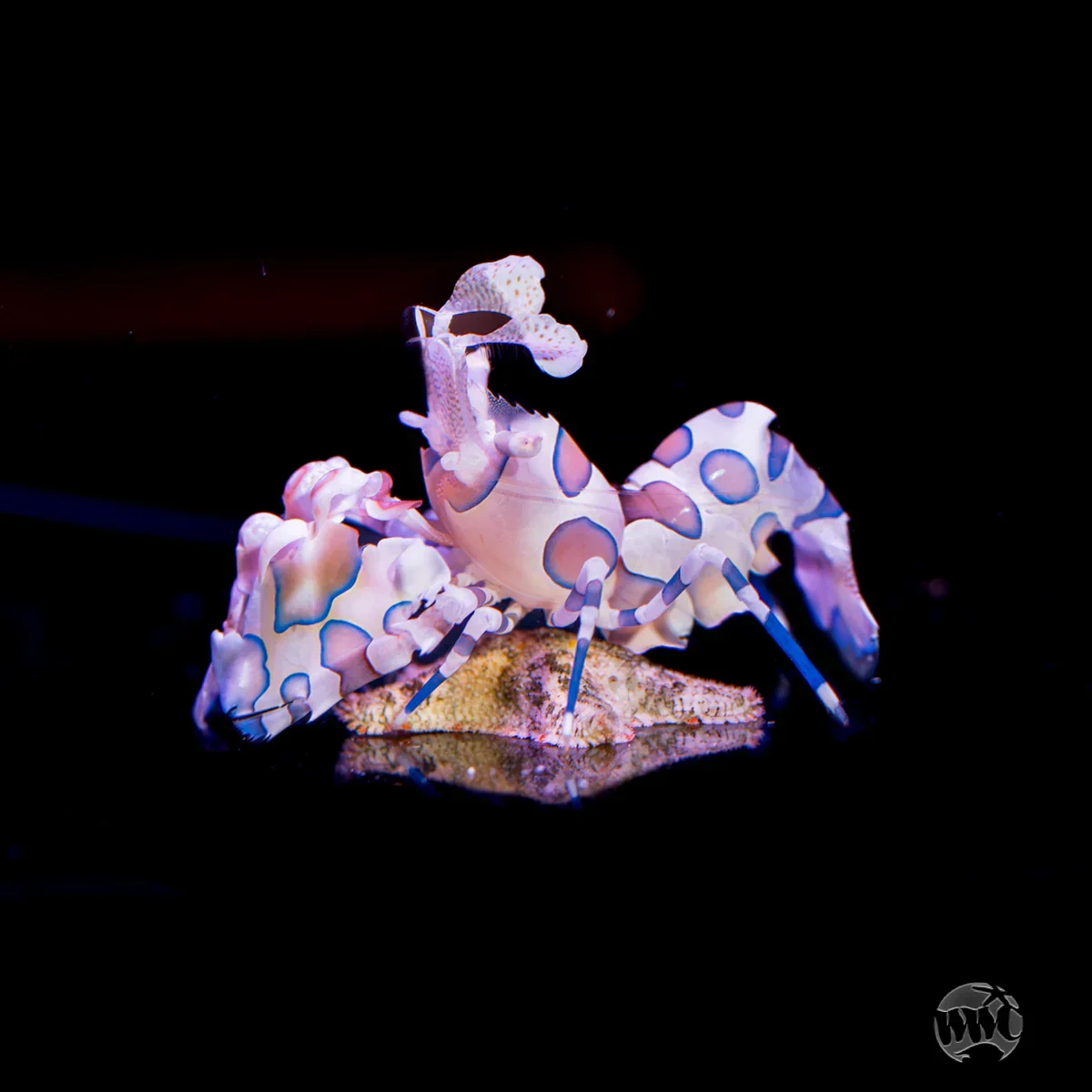 Image 2 of 3
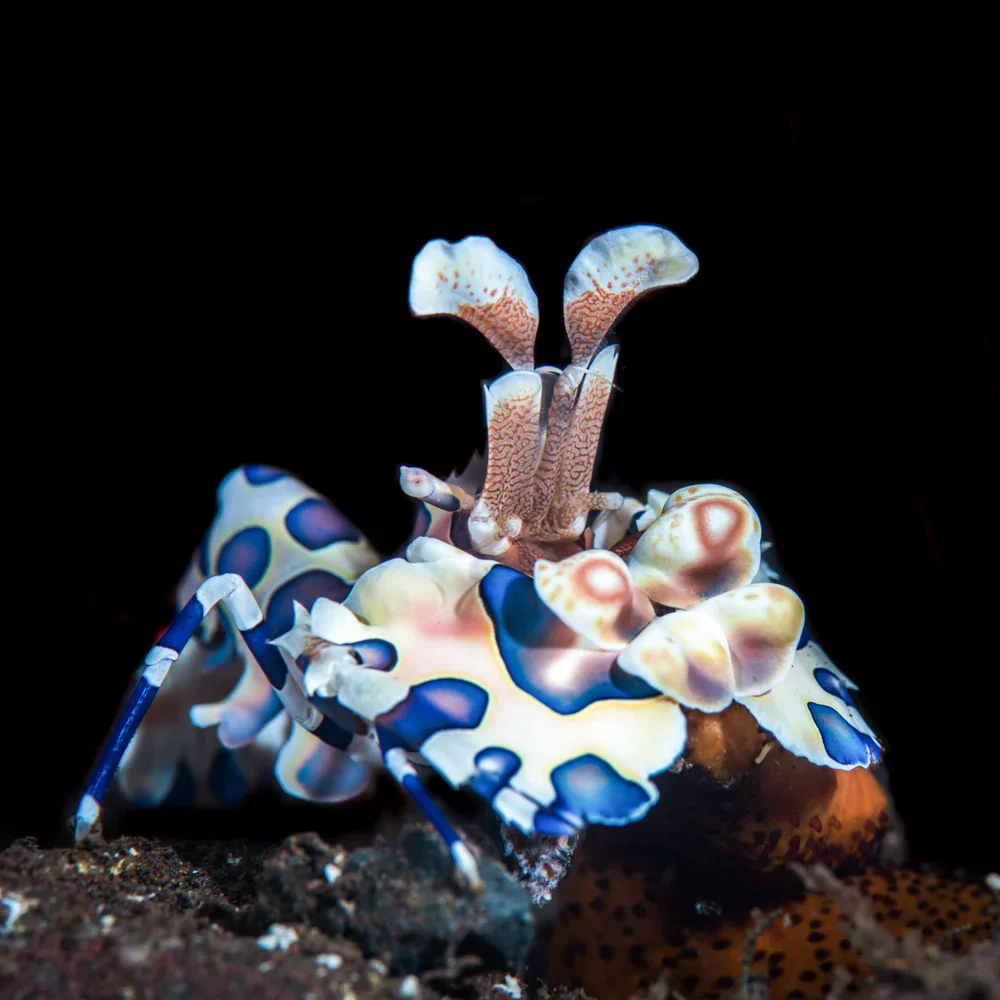 Image 3 of 3
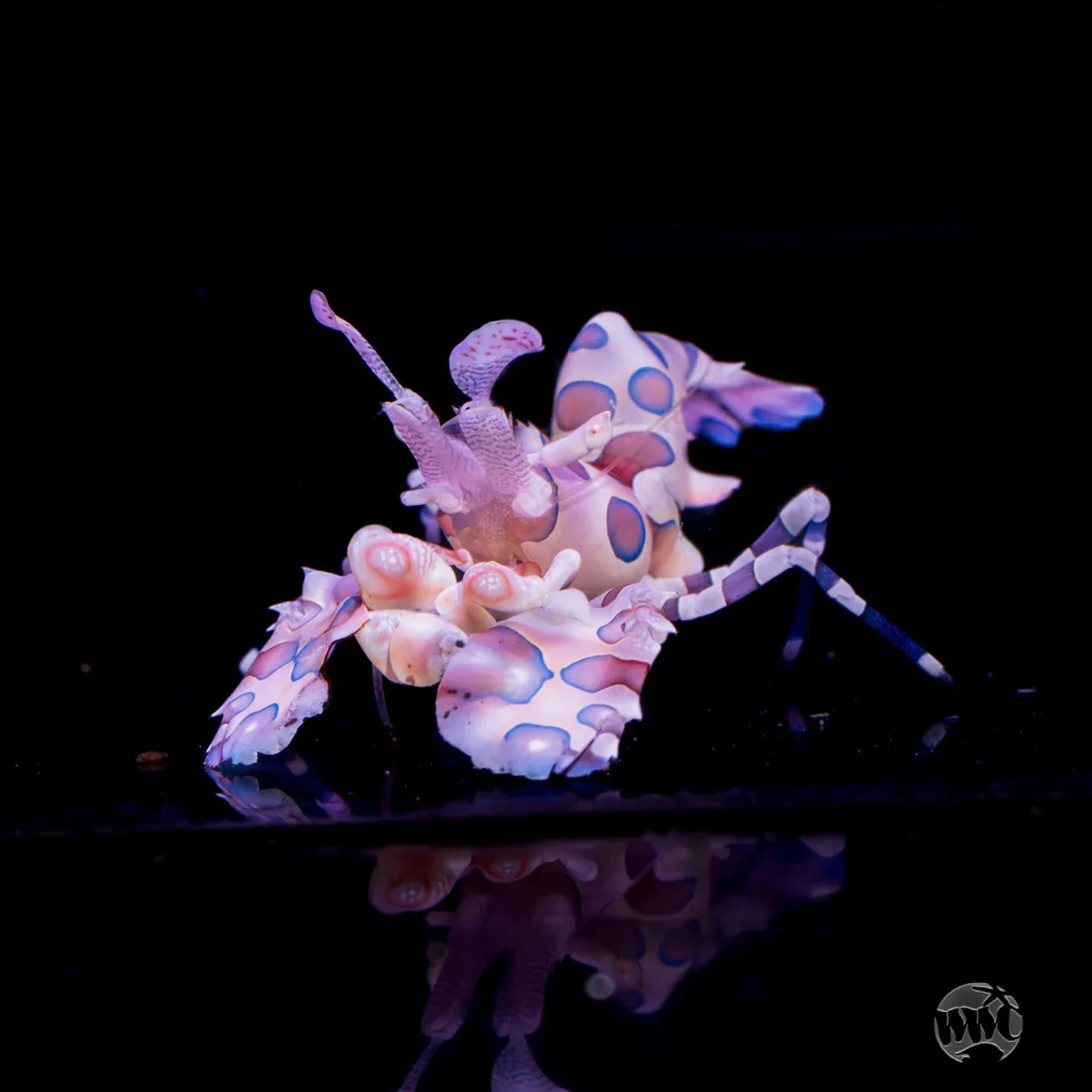
The Harlequin Shrimp (Hymenocera picta or Hymenocera elegans) is an extraordinary and visually mesmerizing marine invertebrate featuring a cream-colored body covered in large, elaborate patterns of neon pink, purple, or deep blue spots. Instantly recognizable by its highly oversized, paddle-like claws and flattened antennae that make it look like a delicate praying mantis, this specialized crustacean is famous in the saltwater hobby for its strict, uncompromising diet. It is frequently employed by reef keepers as a highly targeted biological solution for eliminating invasive asterina starfish outbreaks.
Tank Requirements
Minimum Tank Size: 10 to 20 gallons; because they are slow-moving and stay localized to small territories, they can thrive in smaller nano setups, provided the water parameters remain highly stable.
Aquarium Decor: Plentiful live rock structures arranged with small, tight caves and low-light overhangs where the shrimp can hide its prey and retreat during its molting cycles.
Temperature: 72°F – 78°F (22°C – 26°C).
Salinity (Specific Gravity): 1.023 – 1.025; exceptionally sensitive to rapid changes in salinity and water chemistry.
pH Range: 8.1 – 8.4.
Care and Feeding
Diet: Strict Obligate Carnivore; it feeds exclusively on the tube feet of live echinoderms, primarily starfish. It will completely ignore flakes, pellets, frozen mysis, or any other standard aquarium foods. It requires a continuous supply of live starfish (such as chocolate chip starfish or asterina pests) to survive.
Reef Safe Rating: Reef safe; it is completely harmless to small polyp stony (SPS) corals, large polyp stony (LPS) corals, soft corals, clams, fish, and other non-echinoderm invertebrates.
Temperament: Peaceful; completely non-aggressive toward fish and other tank mates, though it will aggressively hunt any starfish introduced to the tank. They can be kept singly, but they thrive best when kept in mated male-female pairs, where they will cooperatively hunt down and harvest much larger starfish together.
The Harlequin Shrimp (Hymenocera picta or Hymenocera elegans) is an extraordinary and visually mesmerizing marine invertebrate featuring a cream-colored body covered in large, elaborate patterns of neon pink, purple, or deep blue spots. Instantly recognizable by its highly oversized, paddle-like claws and flattened antennae that make it look like a delicate praying mantis, this specialized crustacean is famous in the saltwater hobby for its strict, uncompromising diet. It is frequently employed by reef keepers as a highly targeted biological solution for eliminating invasive asterina starfish outbreaks.
Tank Requirements
Minimum Tank Size: 10 to 20 gallons; because they are slow-moving and stay localized to small territories, they can thrive in smaller nano setups, provided the water parameters remain highly stable.
Aquarium Decor: Plentiful live rock structures arranged with small, tight caves and low-light overhangs where the shrimp can hide its prey and retreat during its molting cycles.
Temperature: 72°F – 78°F (22°C – 26°C).
Salinity (Specific Gravity): 1.023 – 1.025; exceptionally sensitive to rapid changes in salinity and water chemistry.
pH Range: 8.1 – 8.4.
Care and Feeding
Diet: Strict Obligate Carnivore; it feeds exclusively on the tube feet of live echinoderms, primarily starfish. It will completely ignore flakes, pellets, frozen mysis, or any other standard aquarium foods. It requires a continuous supply of live starfish (such as chocolate chip starfish or asterina pests) to survive.
Reef Safe Rating: Reef safe; it is completely harmless to small polyp stony (SPS) corals, large polyp stony (LPS) corals, soft corals, clams, fish, and other non-echinoderm invertebrates.
Temperament: Peaceful; completely non-aggressive toward fish and other tank mates, though it will aggressively hunt any starfish introduced to the tank. They can be kept singly, but they thrive best when kept in mated male-female pairs, where they will cooperatively hunt down and harvest much larger starfish together.