
 Image 1 of 1
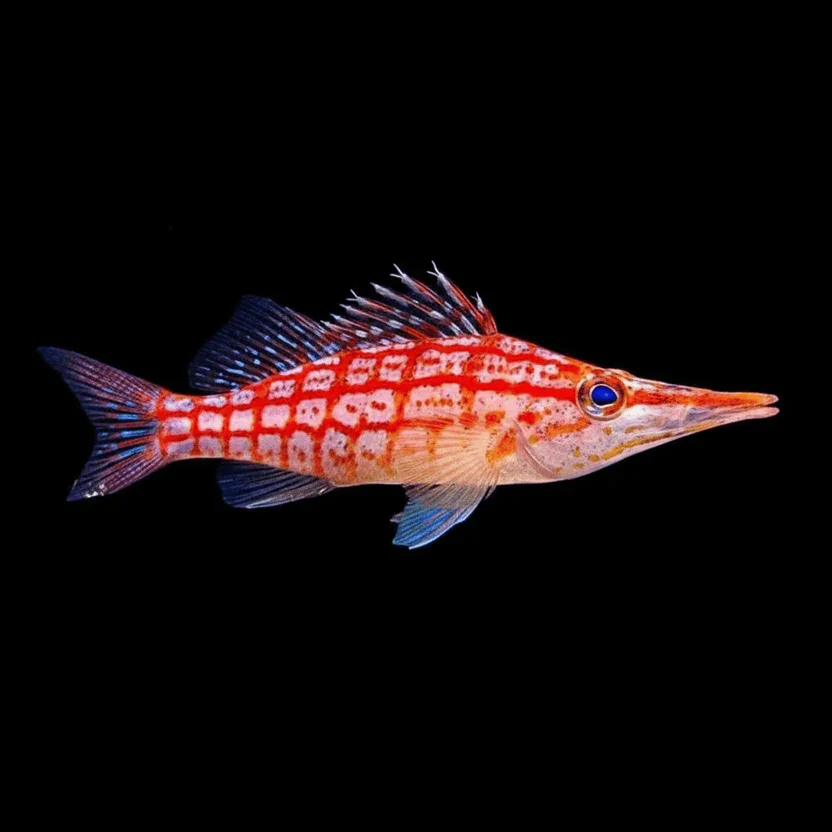
The Longnose Hawkfish (Oxycirrhites typus) is a highly charismatic marine species featuring a distinct, elongated snout and a vibrant white body overlaid with a striking red grid-like pattern that resembles plaid fabric. Instantly recognizable by the small, hair-like tufts (cirri) on the tips of its dorsal fin spines, this fascinating predatory fish lacks a swim bladder. Instead of swimming continuously in open water, it spends its day perched atop rock columns and corals, swiveling its eyes independently to watch for incoming food or predators.
Tank Requirements
Minimum Tank Size: 30 gallons or larger; its stationary perching behavior makes it well-suited for smaller layouts, provided there is enough vertical rock real estate.
Aquarium Decor: Plentiful, tall live rock structures, branching corals, or artificial decorations that offer elevated vantage points for perching.
Temperature: 72°F – 78°F (22°C – 26°C).
Salinity (Specific Gravity): 1.020 – 1.025.
pH Range: 8.1 – 8.4.
Care and Feeding
Diet: Carnivore; an enthusiastic and predatory feeder that should be offered a variety of frozen meaty foods such as mysis shrimp, enriched brine shrimp, krill, and finely chopped fresh seafood. It will also quickly acclimate to high-quality marine pellets.
Reef Safe Rating: Reef safe with caution; it is entirely harmless to small polyp stony (SPS) corals, large polyp stony (LPS) corals, and soft corals, frequently choosing them as perches. However, its long snout is perfectly evolved to snap up small ornamental invertebrates, making it a serious threat to small shrimp, crabs, and tiny feather dusters.
Temperament: Semi-aggressive; it is generally peaceful toward larger community tank mates, but it can become aggressively territorial over its favorite perching spot against other hawkfish or small, bottom-dwelling fish like gobies and firefish.
The Longnose Hawkfish (Oxycirrhites typus) is a highly charismatic marine species featuring a distinct, elongated snout and a vibrant white body overlaid with a striking red grid-like pattern that resembles plaid fabric. Instantly recognizable by the small, hair-like tufts (cirri) on the tips of its dorsal fin spines, this fascinating predatory fish lacks a swim bladder. Instead of swimming continuously in open water, it spends its day perched atop rock columns and corals, swiveling its eyes independently to watch for incoming food or predators.
Tank Requirements
Minimum Tank Size: 30 gallons or larger; its stationary perching behavior makes it well-suited for smaller layouts, provided there is enough vertical rock real estate.
Aquarium Decor: Plentiful, tall live rock structures, branching corals, or artificial decorations that offer elevated vantage points for perching.
Temperature: 72°F – 78°F (22°C – 26°C).
Salinity (Specific Gravity): 1.020 – 1.025.
pH Range: 8.1 – 8.4.
Care and Feeding
Diet: Carnivore; an enthusiastic and predatory feeder that should be offered a variety of frozen meaty foods such as mysis shrimp, enriched brine shrimp, krill, and finely chopped fresh seafood. It will also quickly acclimate to high-quality marine pellets.
Reef Safe Rating: Reef safe with caution; it is entirely harmless to small polyp stony (SPS) corals, large polyp stony (LPS) corals, and soft corals, frequently choosing them as perches. However, its long snout is perfectly evolved to snap up small ornamental invertebrates, making it a serious threat to small shrimp, crabs, and tiny feather dusters.
Temperament: Semi-aggressive; it is generally peaceful toward larger community tank mates, but it can become aggressively territorial over its favorite perching spot against other hawkfish or small, bottom-dwelling fish like gobies and firefish.