
 Image 1 of 1
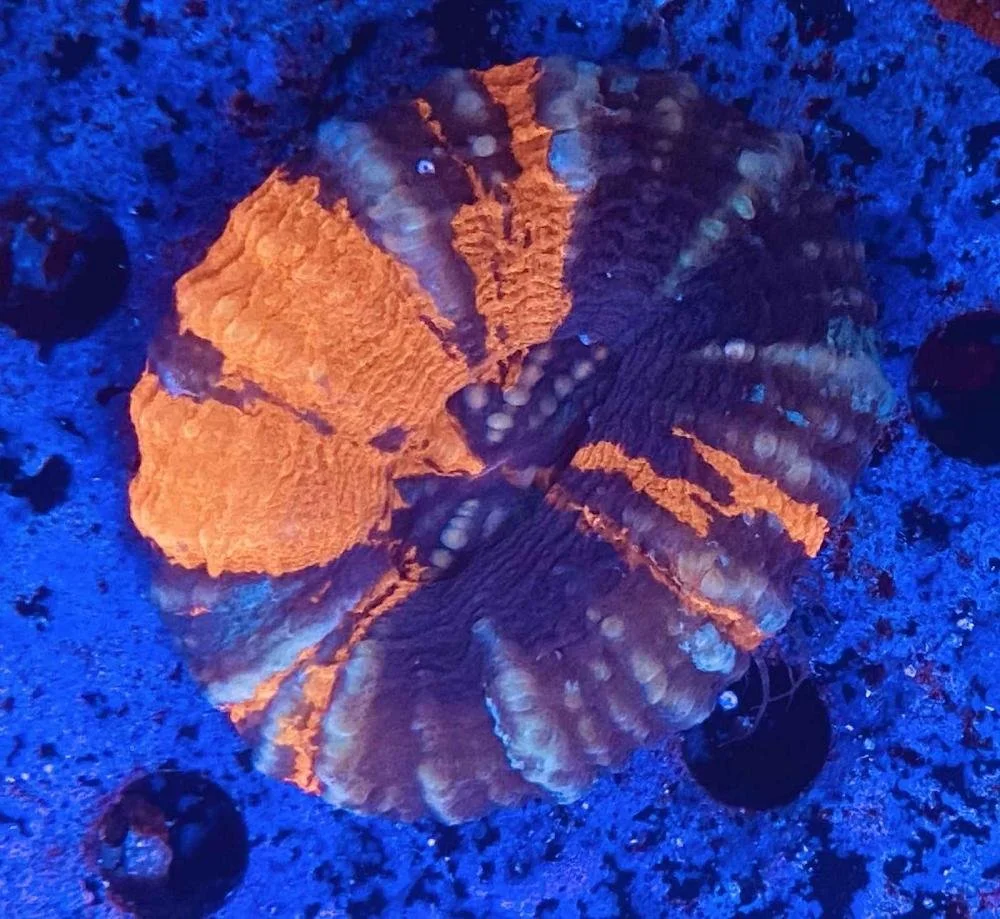
The Master Scolymia (Homophyllia australis), often called a Master Scoly, is an elite, single-polyp large polyp stony (LPS) coral featuring an exceptionally rare and complex color pattern with a dominant fiery orange pie-slice streak paired with dark plum, crimson, and neon green mottling. Highly coveted by serious collectors as a rare jewel for the reef aquarium, it is a slow-growing centerpiece that demands stable water parameters and low-stress environmental conditions to preserve its intricate patterning.
Tank Requirements
Lighting: Low to moderate (30–120 PAR); subdued, indirect illumination is highly recommended, as intense lighting will stress the polyp, cause tissue retraction, and degrade its rare pigments.
Water Flow: Low and gentle; requires a mild, fluid movement to clear away mucus coats and detritus without aggressively flattening its flesh against its underlying skeletal base.
Temperature: 72°F – 78°F (22°C – 26°C).
Salinity (Specific Gravity): 1.023 – 1.025.
pH Range: 8.1 – 8.4.
Care and Feeding
Placement: Bottom of the aquarium, placed flat on a smooth sandbed or nestled safely into a low rubble zone where it cannot slide, flip over, or get scratched by surrounding rocks.
Diet: Photosynthetic via zooxanthellae, but exhibits a massive feeding response at night and benefits heavily from regular spot-feeding of meaty foods like mysis shrimp or high-grade LPS pellets.
Temperament: Peaceful; it does not produce long sweeper tentacles, allowing it to touch other color variations of the same species safely, making it perfect for high-end scoly collections.
The Master Scolymia (Homophyllia australis), often called a Master Scoly, is an elite, single-polyp large polyp stony (LPS) coral featuring an exceptionally rare and complex color pattern with a dominant fiery orange pie-slice streak paired with dark plum, crimson, and neon green mottling. Highly coveted by serious collectors as a rare jewel for the reef aquarium, it is a slow-growing centerpiece that demands stable water parameters and low-stress environmental conditions to preserve its intricate patterning.
Tank Requirements
Lighting: Low to moderate (30–120 PAR); subdued, indirect illumination is highly recommended, as intense lighting will stress the polyp, cause tissue retraction, and degrade its rare pigments.
Water Flow: Low and gentle; requires a mild, fluid movement to clear away mucus coats and detritus without aggressively flattening its flesh against its underlying skeletal base.
Temperature: 72°F – 78°F (22°C – 26°C).
Salinity (Specific Gravity): 1.023 – 1.025.
pH Range: 8.1 – 8.4.
Care and Feeding
Placement: Bottom of the aquarium, placed flat on a smooth sandbed or nestled safely into a low rubble zone where it cannot slide, flip over, or get scratched by surrounding rocks.
Diet: Photosynthetic via zooxanthellae, but exhibits a massive feeding response at night and benefits heavily from regular spot-feeding of meaty foods like mysis shrimp or high-grade LPS pellets.
Temperament: Peaceful; it does not produce long sweeper tentacles, allowing it to touch other color variations of the same species safely, making it perfect for high-end scoly collections.