
 Image 1 of 1
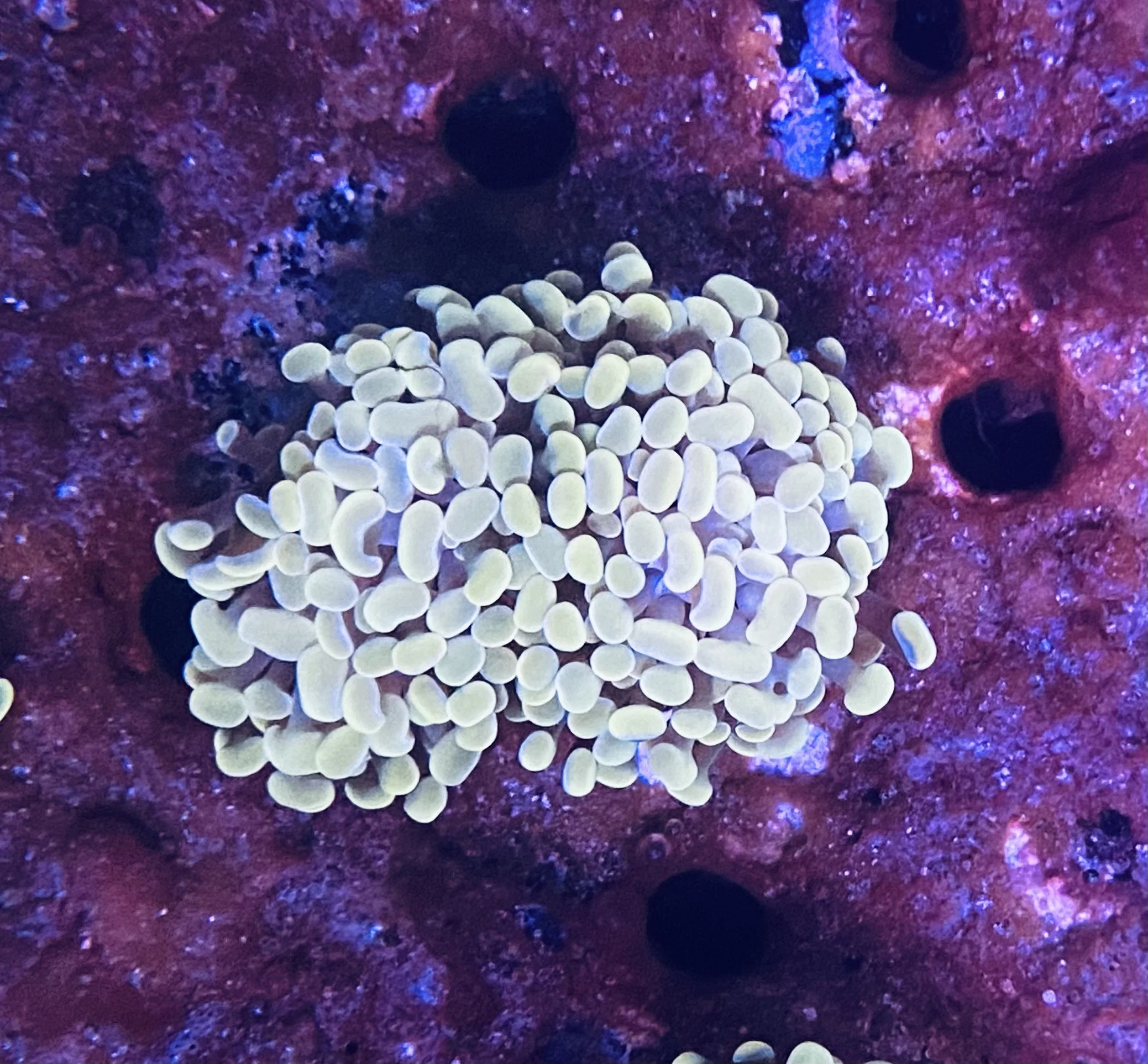
The golden hammer coral (Euphyllia ancora or Euphyllia paraancora) is a highly prized large polyp stony (LPS) coral famous for its metallic gold or yellow, hammer-shaped tentacle tips. Native to the Indo-Pacific and Australia, it adds striking movement and vibrant color to saltwater reef tanks.
Care Requirements
Lighting: Medium intensity (PAR 80–150); full-spectrum LED or T5 lighting helps maintain its rich golden hue.
Water Flow: Low to moderate, indirect flow. Too much current damages the flesh, while too little lets detritus settle.
Water Parameters: Temperature 74–78°F, salinity 1.025, alkalinity 7–9 dKH, calcium 380–450 ppm, and magnesium 1300–1500 ppm.
Feeding: Mostly photosynthetic via zooxanthellae, but benefits from weekly target-feedings of mysis shrimp or microplankton.
Placement & Temperament
Aggression: Semi-aggressive with long sweeper tentacles that can sting neighboring corals.
Spacing: Keep it physically separated from other coral colonies and different Euphyllia species to prevent tissue damage.
Colony Type: Available in branching or wall varieties; branching types are typically hardier and easier for intermediate hobbyists to propagate and manage
The golden hammer coral (Euphyllia ancora or Euphyllia paraancora) is a highly prized large polyp stony (LPS) coral famous for its metallic gold or yellow, hammer-shaped tentacle tips. Native to the Indo-Pacific and Australia, it adds striking movement and vibrant color to saltwater reef tanks.
Care Requirements
Lighting: Medium intensity (PAR 80–150); full-spectrum LED or T5 lighting helps maintain its rich golden hue.
Water Flow: Low to moderate, indirect flow. Too much current damages the flesh, while too little lets detritus settle.
Water Parameters: Temperature 74–78°F, salinity 1.025, alkalinity 7–9 dKH, calcium 380–450 ppm, and magnesium 1300–1500 ppm.
Feeding: Mostly photosynthetic via zooxanthellae, but benefits from weekly target-feedings of mysis shrimp or microplankton.
Placement & Temperament
Aggression: Semi-aggressive with long sweeper tentacles that can sting neighboring corals.
Spacing: Keep it physically separated from other coral colonies and different Euphyllia species to prevent tissue damage.
Colony Type: Available in branching or wall varieties; branching types are typically hardier and easier for intermediate hobbyists to propagate and manage