
 Image 1 of 1
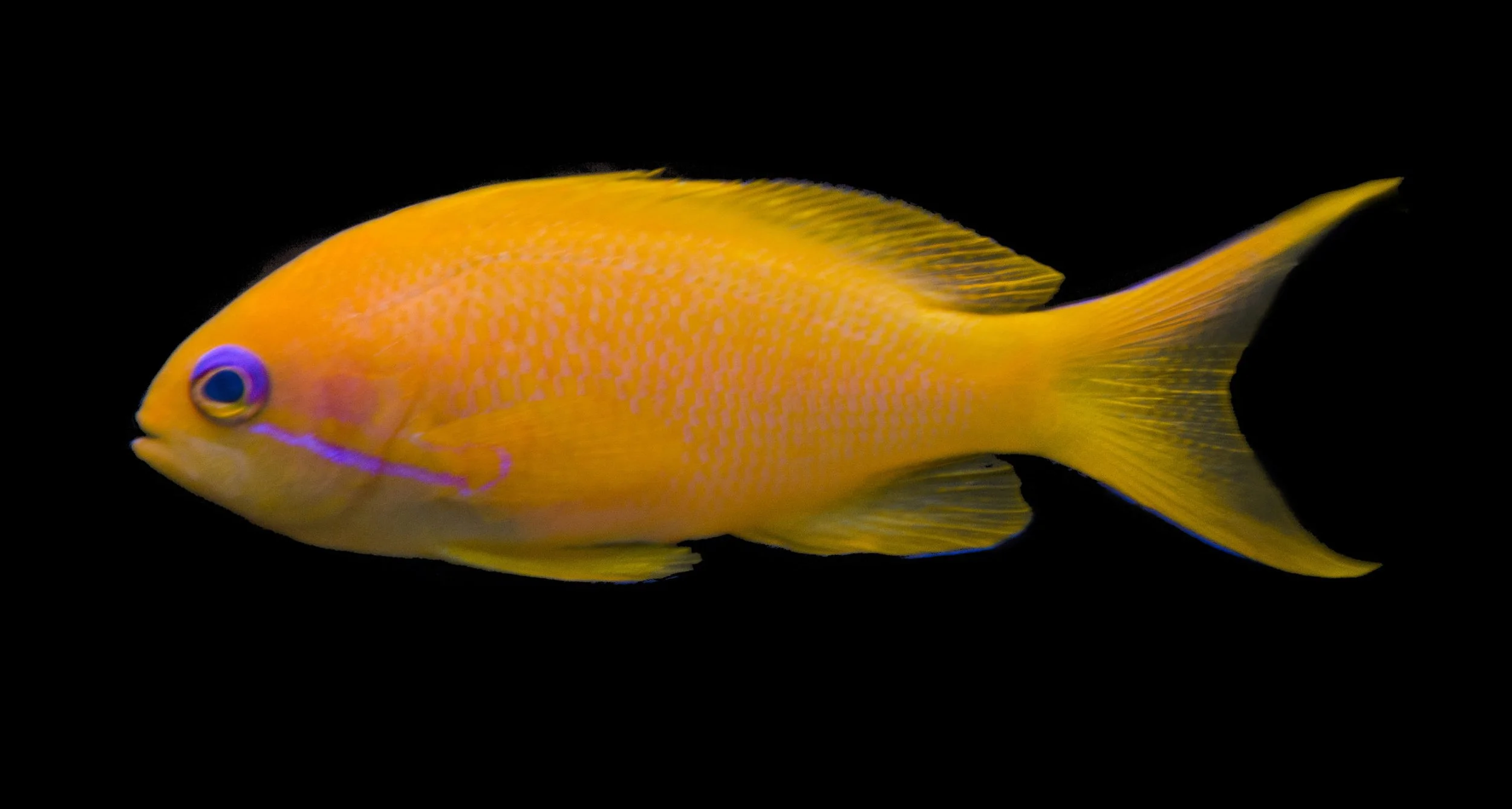
The Dispar Anthias (Pseudanthias dispar), frequently called the Orange Blue Eye Anthias or Madder Seaperch, is a stunningly vibrant marine fish featuring a sleek, pastel-orange body that perfectly complements its highly expressive, electric-blue rimmed eyes. Mature males develop a brilliant, sail-like red dorsal fin and a striking magenta stripe across their cheeks. Sourced from the high-flow reef walls of the Indo-Pacific, this active open-water schooling species brings dramatic color, energy, and elegant movement to the middle and upper zones of large marine displays.
Tank Requirements
Minimum Tank Size: 70 to 75 gallons for a single specimen, though 125 gallons or larger is critical to house a natural schooling group.
Aquarium Decor: Open upper swimming channels paired with extensive live rock networks forming numerous overhangs, large caves, and low-light crevices for secure nighttime shelter.
Temperature: 72°F – 78°F (22°C – 26°C).
Salinity (Specific Gravity): 1.020 – 1.025.
pH Range: 8.1 – 8.4.
Care and Feeding
Diet: Carnivorous planktivore; possesses a rapid metabolism and must feed directly out of the open water column. It requires multiple daily feedings (3 to 4 times minimum) of vitamin-enriched mysis shrimp, frozen copepods, calanus, rotifers, and high-quality micro-pellets.
Reef Safe Rating: Reef safe; it is completely harmless toward small polyp stony (SPS) corals, large polyp stony (LPS) corals, soft corals, clams, and small ornamental invertebrates.
Temperament: Peaceful; highly docile and communal, though it features a strict social hierarchy. To minimize stress, they thrive best when kept in a small group consisting of one dominant male alongside a harem of four or more females introduced simultaneously.
The Dispar Anthias (Pseudanthias dispar), frequently called the Orange Blue Eye Anthias or Madder Seaperch, is a stunningly vibrant marine fish featuring a sleek, pastel-orange body that perfectly complements its highly expressive, electric-blue rimmed eyes. Mature males develop a brilliant, sail-like red dorsal fin and a striking magenta stripe across their cheeks. Sourced from the high-flow reef walls of the Indo-Pacific, this active open-water schooling species brings dramatic color, energy, and elegant movement to the middle and upper zones of large marine displays.
Tank Requirements
Minimum Tank Size: 70 to 75 gallons for a single specimen, though 125 gallons or larger is critical to house a natural schooling group.
Aquarium Decor: Open upper swimming channels paired with extensive live rock networks forming numerous overhangs, large caves, and low-light crevices for secure nighttime shelter.
Temperature: 72°F – 78°F (22°C – 26°C).
Salinity (Specific Gravity): 1.020 – 1.025.
pH Range: 8.1 – 8.4.
Care and Feeding
Diet: Carnivorous planktivore; possesses a rapid metabolism and must feed directly out of the open water column. It requires multiple daily feedings (3 to 4 times minimum) of vitamin-enriched mysis shrimp, frozen copepods, calanus, rotifers, and high-quality micro-pellets.
Reef Safe Rating: Reef safe; it is completely harmless toward small polyp stony (SPS) corals, large polyp stony (LPS) corals, soft corals, clams, and small ornamental invertebrates.
Temperament: Peaceful; highly docile and communal, though it features a strict social hierarchy. To minimize stress, they thrive best when kept in a small group consisting of one dominant male alongside a harem of four or more females introduced simultaneously.