
 Image 1 of 1
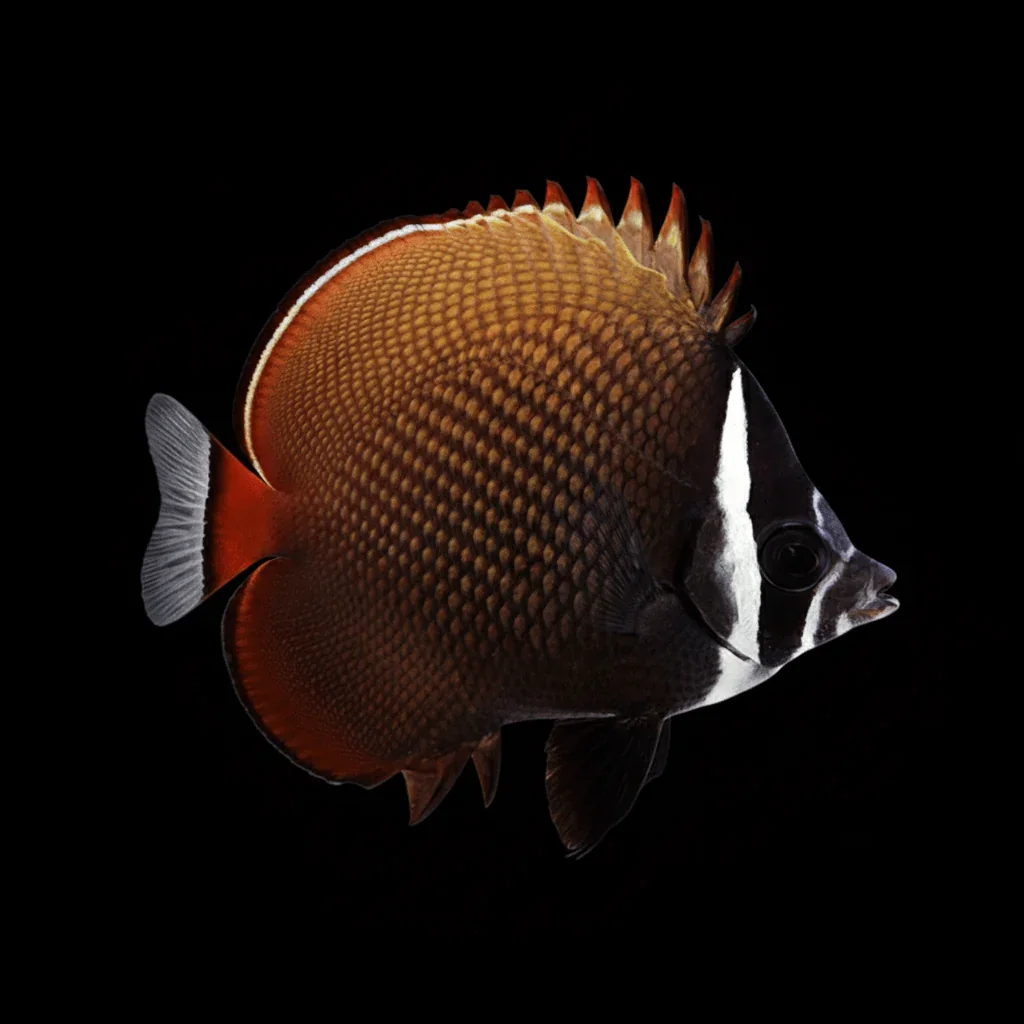
The Pakistan Butterflyfish (Chaetodon collare), also universally known as the Collared Butterflyfish or Redtail Butterflyfish, is a majestic and deeply colored marine species featuring a striking, smoky charcoal-to-black body detailed with fine golden-brown scale margins. It is instantly recognized by a brilliant, high-contrast white vertical collar band running directly behind its head and a vibrant, fiery brick-red tail fin tipped in a stark white border. Sourced from the rich reef zones of the western Indian Ocean, it is highly coveted for its robust silhouette and active, inquisitive swimming style.
Tank Requirements
Minimum Tank Size: 125 gallons or larger; as a powerful and continuously pacing swimmer, it demands a lengthy horizontal tank blueprint to minimize stress and prevent border pacing.
Aquarium Decor: Mature, sprawling live rock layouts configured with high-ceiling arches, deep tunnels, and vast open water channels to allow clear swimming lanes while offering safe shelter zones.
Temperature: 72°F – 78°F (22°C – 26°C).
Salinity (Specific Gravity): 1.020 – 1.025.
pH Range: 8.1 – 8.4.
Care and Feeding
Diet: Omnivore; can be a moderately picky eater during initial acclimation. Requires multiple daily feedings of vitamin-enriched mysis shrimp, frozen krill, chopped fresh clams on the half-shell, and specialized preparations containing natural sponge matter, balanced with high-quality spirulina flakes or pellets.
Reef Safe Rating: Not reef safe; it is an active, persistent rock grazer that will quickly pick apart large polyp stony (LPS) corals, soft leather polyps, zoanthids, and delicate clam mantles. It belongs strictly in a mature fish-only-with-live-rock (FOWLR) system.
Temperament: Peaceful to semi-aggressive; it is entirely docile toward unrelated community tank mates but can display minor territorial aggression toward other similarly shaped butterflyfish. Unlike many other butterfly species, it adapts well to being kept in a small, established male-female pair if introduced simultaneously to a massive system.
The Pakistan Butterflyfish (Chaetodon collare), also universally known as the Collared Butterflyfish or Redtail Butterflyfish, is a majestic and deeply colored marine species featuring a striking, smoky charcoal-to-black body detailed with fine golden-brown scale margins. It is instantly recognized by a brilliant, high-contrast white vertical collar band running directly behind its head and a vibrant, fiery brick-red tail fin tipped in a stark white border. Sourced from the rich reef zones of the western Indian Ocean, it is highly coveted for its robust silhouette and active, inquisitive swimming style.
Tank Requirements
Minimum Tank Size: 125 gallons or larger; as a powerful and continuously pacing swimmer, it demands a lengthy horizontal tank blueprint to minimize stress and prevent border pacing.
Aquarium Decor: Mature, sprawling live rock layouts configured with high-ceiling arches, deep tunnels, and vast open water channels to allow clear swimming lanes while offering safe shelter zones.
Temperature: 72°F – 78°F (22°C – 26°C).
Salinity (Specific Gravity): 1.020 – 1.025.
pH Range: 8.1 – 8.4.
Care and Feeding
Diet: Omnivore; can be a moderately picky eater during initial acclimation. Requires multiple daily feedings of vitamin-enriched mysis shrimp, frozen krill, chopped fresh clams on the half-shell, and specialized preparations containing natural sponge matter, balanced with high-quality spirulina flakes or pellets.
Reef Safe Rating: Not reef safe; it is an active, persistent rock grazer that will quickly pick apart large polyp stony (LPS) corals, soft leather polyps, zoanthids, and delicate clam mantles. It belongs strictly in a mature fish-only-with-live-rock (FOWLR) system.
Temperament: Peaceful to semi-aggressive; it is entirely docile toward unrelated community tank mates but can display minor territorial aggression toward other similarly shaped butterflyfish. Unlike many other butterfly species, it adapts well to being kept in a small, established male-female pair if introduced simultaneously to a massive system.