
 Image 1 of 1
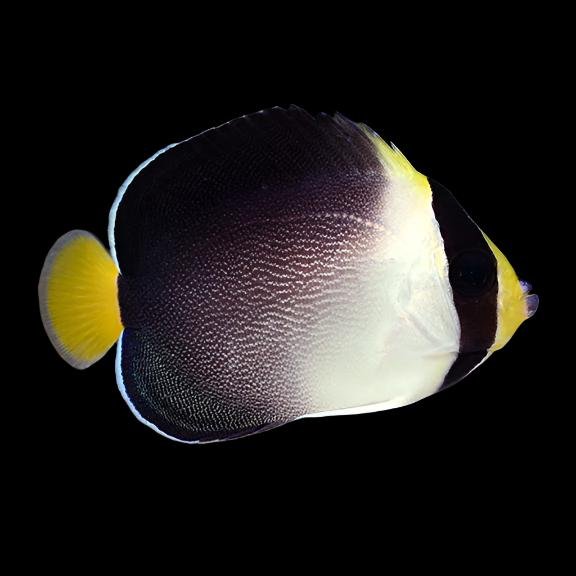
The Singapore Angelfish (Chaetodontoplus mesoleucus), also known as the Vermiculated Angelfish, is a unique marine species featuring a distinct, butterflyfish-like body shape with a creamy white front that smoothly fades into a velvety black rear. Its striking aesthetic is accented by a vibrant yellow nose and tail, blue lips, and a prominent black vertical mask running directly through its eyes. While classified under the large angelfish family, its intermediate size and slow-pacing nature make it an intriguing addition to mature fish-only or large predator systems.
Tank Requirements
Minimum Tank Size: 100 to 125 gallons; requires a spacious footprint to support its adult size and prevent aggressive border pacing.
Aquarium Decor: Heavy arrangements of mature live rock forming complex cave networks, deep overhangs, and flat grazing walls covered in natural biofilm and microalgae.
Temperature: 72°F – 78°F (22°C – 26°C).
Salinity (Specific Gravity): 1.020 – 1.025.
pH Range: 8.1 – 8.4.
Care and Feeding
Diet: Omnivorous; highly reliant on complex nutrition including spirulina, marine algae, frozen mysis shrimp, and specialized angelfish preparations containing natural sponge matter to mimic wild foraging habits.
Reef Safe Rating: Not reef safe; unlike pelagic species, it is a persistent grazer that will quickly pick apart large polyp stony (LPS) corals, soft leather polyps, zoanthids, and delicate clam mantles.
Temperament: Semi-aggressive; generally timid and shy when first introduced to a new layout, but will become highly territorial toward its own kind and should only be kept as a single specimen per tank.
The Singapore Angelfish (Chaetodontoplus mesoleucus), also known as the Vermiculated Angelfish, is a unique marine species featuring a distinct, butterflyfish-like body shape with a creamy white front that smoothly fades into a velvety black rear. Its striking aesthetic is accented by a vibrant yellow nose and tail, blue lips, and a prominent black vertical mask running directly through its eyes. While classified under the large angelfish family, its intermediate size and slow-pacing nature make it an intriguing addition to mature fish-only or large predator systems.
Tank Requirements
Minimum Tank Size: 100 to 125 gallons; requires a spacious footprint to support its adult size and prevent aggressive border pacing.
Aquarium Decor: Heavy arrangements of mature live rock forming complex cave networks, deep overhangs, and flat grazing walls covered in natural biofilm and microalgae.
Temperature: 72°F – 78°F (22°C – 26°C).
Salinity (Specific Gravity): 1.020 – 1.025.
pH Range: 8.1 – 8.4.
Care and Feeding
Diet: Omnivorous; highly reliant on complex nutrition including spirulina, marine algae, frozen mysis shrimp, and specialized angelfish preparations containing natural sponge matter to mimic wild foraging habits.
Reef Safe Rating: Not reef safe; unlike pelagic species, it is a persistent grazer that will quickly pick apart large polyp stony (LPS) corals, soft leather polyps, zoanthids, and delicate clam mantles.
Temperament: Semi-aggressive; generally timid and shy when first introduced to a new layout, but will become highly territorial toward its own kind and should only be kept as a single specimen per tank.