
 Image 1 of 1
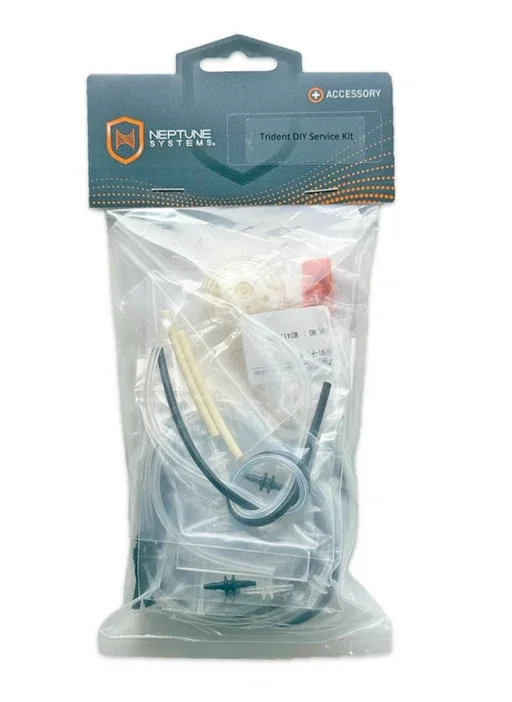
The Neptune Systems Trident DIY Service Kit is a comprehensive, preventative refurbishment package engineered for hands-on, mechanically inclined users to perform scheduled maintenance on their Trident automated water analyzer. Neptune Systems recommends this preventative overhaul every 24 to 36 months of operation to swap out structural parts that naturally wear down, stretch, stain, or clog over years of chemical titration.
Crucial Suitability Constraints
Preventative Only (Will Not Fix Broken Units): This kit is strictly designed to refresh components on a perfectly functioning Trident. If your Trident is currently throwing hard internal hardware errors or has a dead master circuit board, the DIY kit will not fix it. You should choose Neptune's Advanced Replacement or Send-and-Service program instead.
Trident Classic Only: This DIY configuration handles the standard automated testing unit. A do-it-yourself service option is not currently supported or available for the newer Trident NP (Nitrate/Phosphate) models.
User Capability Warning: You must be comfortable working with internal mechanical components, electronic pathways, and following a nearly 30-minute stepwise technical instructional video provided by Neptune Systems.
Complete Kit Component Breakdown
The package replaces the entire internal and external fluid-handling track to lock back in factory calibration tolerances:
Replacement Peristaltic Pump Head: The primary drive assembly responsible for moving fluid with extreme accuracy. Swapping this out is critical for preserving long-term test precision.
Fresh Test Cuvette & Glass Tubing: The internal chamber where colorimetry titrations happen. Over time, the clear glass becomes permanently stained, cloudy, and discolored by reagents, which skews optical readings.
Internal Tubing Harness Assembly: A brand-new configuration of flexible internal pathways to replace rubber lines that naturally soften, stretch, or degrade over time under constant motorized pinching.
External Sample and Waste Lines: A replacement set of black external lines paired with brand-new plastic connectors to minimize backpressure and purge organic buildup.
Optional Sample Line Filter: An extra micronic screen mesh that can be clipped into your aquarium feed line to block free-floating detritus and substrate dust before they can cause an internal plumbing clog
The Neptune Systems Trident DIY Service Kit is a comprehensive, preventative refurbishment package engineered for hands-on, mechanically inclined users to perform scheduled maintenance on their Trident automated water analyzer. Neptune Systems recommends this preventative overhaul every 24 to 36 months of operation to swap out structural parts that naturally wear down, stretch, stain, or clog over years of chemical titration.
Crucial Suitability Constraints
Preventative Only (Will Not Fix Broken Units): This kit is strictly designed to refresh components on a perfectly functioning Trident. If your Trident is currently throwing hard internal hardware errors or has a dead master circuit board, the DIY kit will not fix it. You should choose Neptune's Advanced Replacement or Send-and-Service program instead.
Trident Classic Only: This DIY configuration handles the standard automated testing unit. A do-it-yourself service option is not currently supported or available for the newer Trident NP (Nitrate/Phosphate) models.
User Capability Warning: You must be comfortable working with internal mechanical components, electronic pathways, and following a nearly 30-minute stepwise technical instructional video provided by Neptune Systems.
Complete Kit Component Breakdown
The package replaces the entire internal and external fluid-handling track to lock back in factory calibration tolerances:
Replacement Peristaltic Pump Head: The primary drive assembly responsible for moving fluid with extreme accuracy. Swapping this out is critical for preserving long-term test precision.
Fresh Test Cuvette & Glass Tubing: The internal chamber where colorimetry titrations happen. Over time, the clear glass becomes permanently stained, cloudy, and discolored by reagents, which skews optical readings.
Internal Tubing Harness Assembly: A brand-new configuration of flexible internal pathways to replace rubber lines that naturally soften, stretch, or degrade over time under constant motorized pinching.
External Sample and Waste Lines: A replacement set of black external lines paired with brand-new plastic connectors to minimize backpressure and purge organic buildup.
Optional Sample Line Filter: An extra micronic screen mesh that can be clipped into your aquarium feed line to block free-floating detritus and substrate dust before they can cause an internal plumbing clog